What are the AI automation benefits? The Ultimate Guide
September 3, 2025 | by support@rabgcontent.com
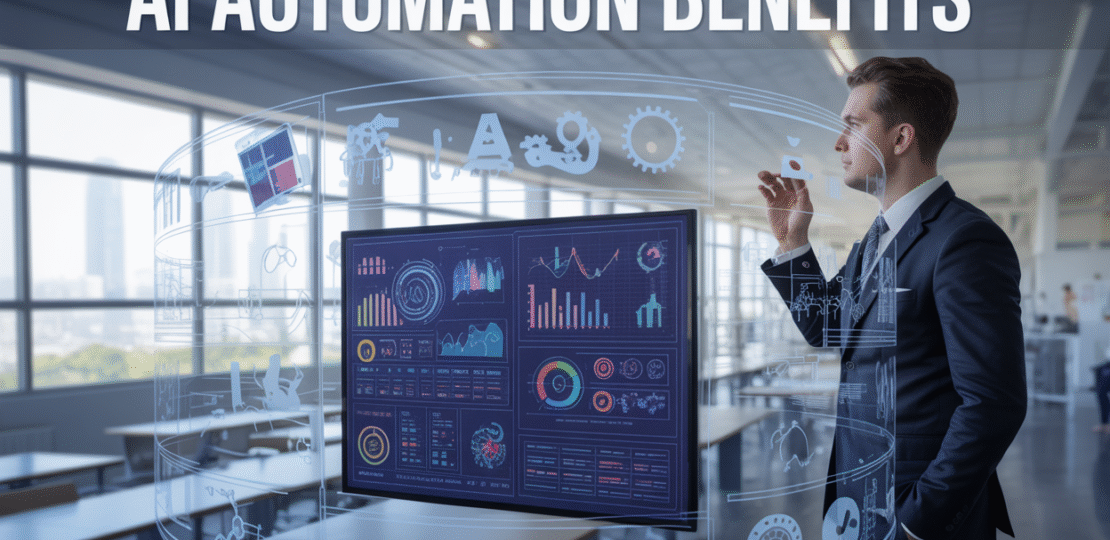
AI automation benefits are transforming how businesses operate across every industry. This guide is designed for business owners, managers, and decision-makers who want to understand how artificial intelligence productivity tools can drive real results for their organizations.
Smart companies are already seeing dramatic improvements in their bottom line through automated workflow efficiency. From small startups to Fortune 500 enterprises, automation ROI benefits are proving that the investment pays off quickly.
We’ll explore how artificial intelligence cost reduction strategies can slash your operational expenses while boosting output. You’ll also discover how data-driven decision-making transforms gut feelings into profitable strategies backed by solid insights. Finally, we’ll show you practical ways intelligent automation systems can scale your business without proportionally increasing your headcount or overhead costs.
Enhanced Productivity and Efficiency

Faster task completion through automated processes
AI automation benefits businesses by completing tasks at lightning speed compared to human execution. Machine learning algorithms can process thousands of data points in seconds, analyze complex patterns, and execute decisions instantly. For example, automated invoice processing that once took hours can now be completed in minutes, while customer service chatbots handle multiple inquiries simultaneously without delays.
The speed advantage becomes even more pronounced with complex calculations and data analysis. Where human analysts might spend days crunching numbers and generating reports, artificial intelligence systems deliver comprehensive insights within minutes. This artificial intelligence productivity boost allows companies to respond to market changes rapidly and make time-sensitive decisions with confidence.
Elimination of repetitive manual work
Repetitive tasks drain employee energy and creativity while consuming valuable time. AI automation takes over mundane activities like data entry, file organization, appointment scheduling, and basic customer inquiries. This shift frees up human workers to focus on strategic thinking, creative problem-solving, and relationship building.
Automated workflow efficiency transforms how teams operate. Instead of spending hours on routine administrative tasks, employees can dedicate their expertise to innovation and complex challenges that require human judgment. The result is a more engaged workforce and better utilization of human talent across the organization.
24/7 operational capabilities without breaks
Unlike human employees, artificial intelligence systems never need sleep, vacations, or sick days. This continuous operation capability provides significant business automation advantages, especially for companies serving global markets or handling time-sensitive processes. Customer support chatbots can assist clients at any hour, while automated monitoring systems keep watch over critical infrastructure around the clock.
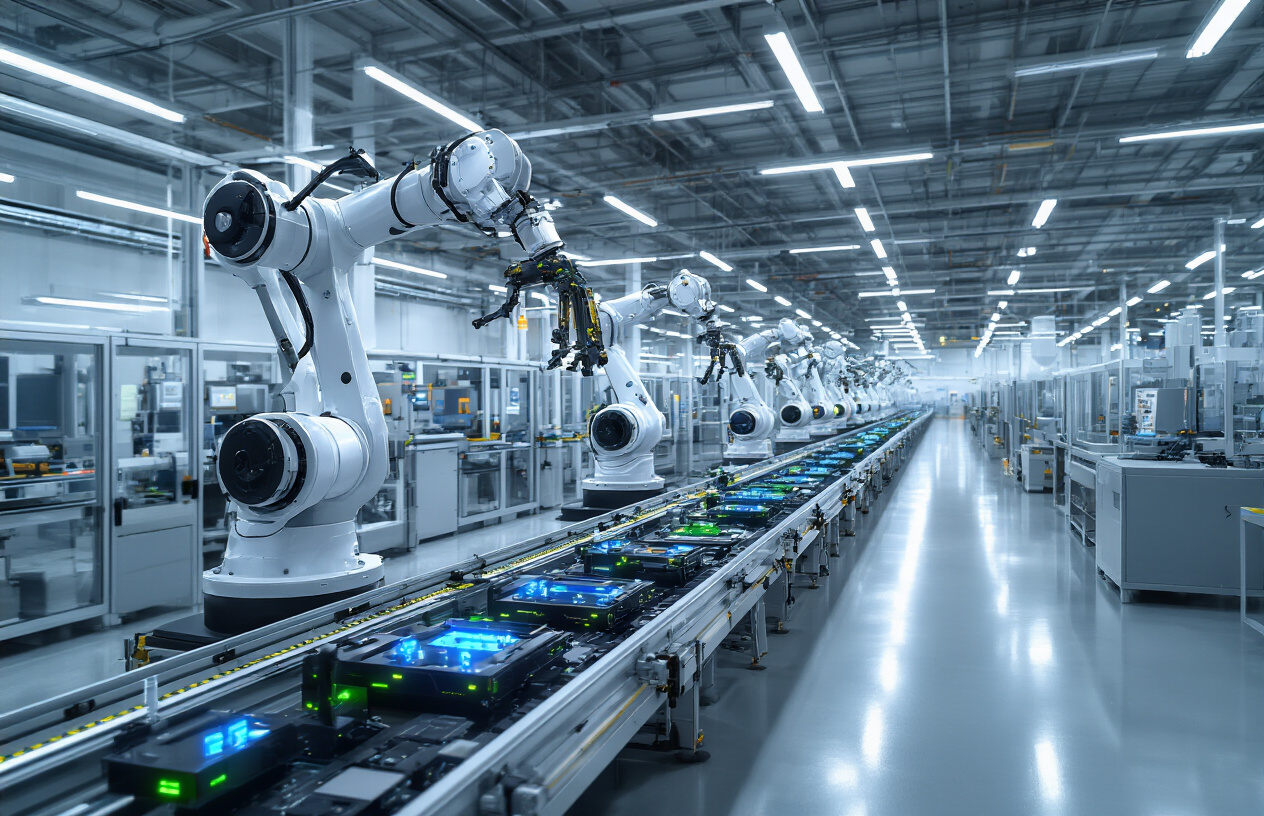
Manufacturing facilities benefit enormously from this constant availability. Production lines can run overnight with AI-powered quality control systems ensuring standards are maintained. Financial institutions use automated fraud detection that operates continuously, protecting customers and assets even when human staff are off duty.
Streamlined workflows and reduced bottlenecks
AI automation identifies and eliminates workflow inefficiencies that often go unnoticed in manual processes. Intelligent automation systems map out entire business processes, pinpoint delays, and suggest optimizations. They can automatically route tasks to available team members, prioritize urgent requests, and ensure nothing falls through the cracks.
Bottlenecks that once caused project delays become manageable through predictive algorithms that forecast potential issues before they occur. Enterprise artificial intelligence automation creates smooth information flow between departments, reduces approval delays, and maintains consistent process standards across all operations.
Significant Cost Reduction

Lower labor costs through reduced manual workforce needs
AI automation benefits become crystal clear when you look at staffing budgets. Companies typically see their labor costs drop by 20-40% within the first year of implementing automated systems. Instead of hiring entire teams to handle repetitive tasks like data entry, invoice processing, or customer service inquiries, businesses can deploy intelligent automation systems that work around the clock without breaks, sick days, or vacation time.
Take customer support as an example. A traditional call center might need 50 representatives to handle peak hours, but AI chatbots and automated response systems can manage 80% of routine inquiries instantly. This means companies only need to maintain smaller teams of specialized agents for complex issues, dramatically cutting payroll expenses while actually improving response times.
Manufacturing presents even more striking examples. Automated assembly lines and AI-powered quality control systems replace dozens of manual workers per shift. These systems don’t just reduce headcount – they eliminate overtime costs, workers’ compensation claims, and the constant cycle of hiring and training replacement staff.
Decreased operational expenses over time
Business automation advantages compound over months and years, creating substantial savings across multiple expense categories. Energy costs drop when AI optimization systems manage heating, cooling, and lighting based on real-time occupancy and usage patterns. Some companies report 15-25% reductions in utility bills after implementing smart building management systems.
Office space requirements shrink when automation handles tasks that previously required dedicated workstations. Document processing, appointment scheduling, and inventory management all move to cloud-based automated systems, freeing up valuable real estate. Many businesses downsize their physical footprint by 30-50% while maintaining the same operational capacity.
Equipment maintenance costs also decrease through predictive analytics. AI monitors machinery performance and schedules maintenance before breakdowns occur, preventing costly emergency repairs and production downtime. This proactive approach typically reduces maintenance expenses by 20-35% compared to reactive repair strategies.
Minimized training and onboarding costs
Traditional employee onboarding can cost companies $4,000-$5,000 per new hire when you factor in training materials, supervisor time, and reduced productivity during the learning curve. Automated systems eliminate these recurring expenses entirely. Once programmed and tested, AI automation systems perform consistently without additional training investments.
Software updates and system improvements happen automatically without pulling employees away from productive work for training sessions. This contrasts sharply with manual processes where every procedure change requires retraining multiple staff members across different shifts and departments.
The knowledge retention challenge disappears with automation. Human employees leave, taking institutional knowledge with them. Automated systems preserve best practices permanently, ensuring consistent execution of complex processes regardless of staff turnover. This stability saves countless hours that would otherwise be spent repeatedly training new hires on the same procedures.
Cross-training requirements also diminish when core processes run automatically. Companies no longer need to train multiple employees on backup procedures for critical functions, reducing training overhead while improving operational reliability during staff absences or departures.
Improved Accuracy and Quality
Elimination of human errors in data processing
When humans handle repetitive data tasks, mistakes happen. Even the most careful person can mistype numbers, overlook details, or make calculation errors after hours of processing information. AI automation benefits businesses by removing these human slip-ups from the equation entirely. Automated systems process thousands of data points without getting tired, distracted, or making the kind of errors that plague manual data entry.
Consider financial reporting where a single decimal point mistake could cost thousands of dollars. Machine learning business solutions can process complex spreadsheets, validate information across multiple databases, and flag inconsistencies without missing a beat. The system doesn’t have bad days, doesn’t rush through tasks before lunch, and doesn’t accidentally transpose numbers.
Consistent output quality across all operations
AI automation delivers the same level of quality every single time. While human performance naturally varies based on mood, energy levels, and external factors, automated workflow efficiency ensures that your Tuesday morning output matches your Friday afternoon results perfectly.
Manufacturing companies see this benefit clearly when AI-controlled quality checks catch defects at the exact same precision rate, regardless of shift changes or operator fatigue. Customer service chatbots provide identical response quality whether it’s the first inquiry of the day or the thousandth. This consistency builds trust with customers and creates reliable business processes that stakeholders can count on.
Enhanced precision in complex calculations and analyses
Complex mathematical operations and data analyses become significantly more precise with intelligent automation systems. Where humans might round numbers or make approximation errors in multi-step calculations, AI processes exact figures through sophisticated algorithms. This precision becomes critical in industries like healthcare, where dosage calculations must be perfect, or engineering, where structural analysis requires exact measurements.
Artificial intelligence productivity shines when handling statistical analyses, risk assessments, and predictive modeling. These systems can process variables that would overwhelm human analysts while maintaining mathematical precision throughout every calculation step.
Reduced rework and correction requirements
Getting things right the first time eliminates the costly cycle of fixing mistakes later. Enterprise AI automation dramatically cuts down on the time and resources spent on corrections, revisions, and do-overs. When automated systems handle tasks with built-in accuracy checks, the need for quality control reviews and error correction drops significantly.
This translates directly into automation ROI benefits since teams can focus on value-adding activities instead of spending time fixing problems that automation prevents from happening in the first place. Project timelines become more predictable when rework becomes the exception rather than the rule.
Better Resource Allocation and Scalability
Optimized Use of Human Talent for Strategic Tasks
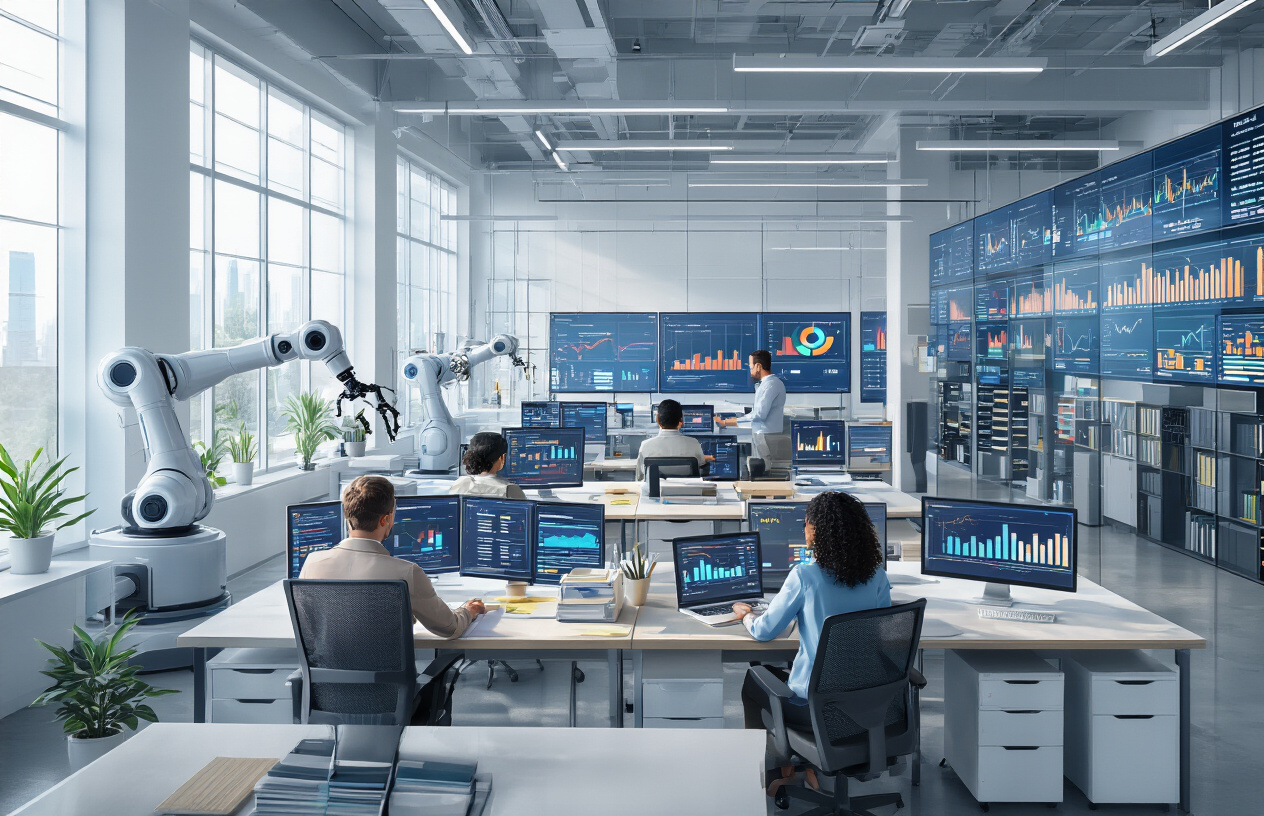
AI automation benefits organizations by freeing up their most valuable asset – human workers – from repetitive, mundane tasks. When machines handle data entry, basic customer inquiries, inventory tracking, and routine calculations, employees can focus on what they do best: creative problem-solving, relationship building, and strategic planning.
This shift transforms entire departments. Marketing teams spend less time compiling reports and more time crafting campaigns that connect with customers. HR professionals move beyond paperwork processing to focus on talent development and workplace culture. Finance teams analyze trends and provide strategic insights rather than getting bogged down in transaction processing.
The result is a more engaged workforce where people feel their skills are actually being used. Employees report higher job satisfaction when they tackle challenges that require human judgment, empathy, and creativity. Companies also see better retention rates because workers aren’t burning out on repetitive tasks.
Easy Scaling of Operations Without Proportional Cost Increases
Traditional business growth often means hiring more people, renting bigger spaces, and multiplying operational costs. AI automation changes this equation completely. When demand increases, automated systems can handle additional workload without requiring proportional investment in human resources.
Consider customer service operations. A traditional call center might need to hire 50 new agents to handle a 100% increase in inquiries. With AI automation handling initial customer interactions and routing complex issues to human agents, the same increase might require only 10-15 additional staff members.
| Traditional Scaling | AI-Enabled Scaling |
|---|---|
| Linear cost increase | Exponential capacity growth |
| 1:1 demand-to-resource ratio | Flexible resource utilization |
| Fixed operational constraints | Dynamic adjustment capabilities |
Manufacturing facilities can ramp up production during peak seasons without hiring temporary workers. E-commerce platforms handle traffic spikes during sales events without crashing or requiring massive infrastructure investments. Software companies deploy updates and handle user support across multiple time zones without maintaining a 24/7 human staff.
Flexible Resource Deployment Based on Demand
AI automation systems excel at real-time resource allocation, shifting capacity where it’s needed most. Unlike human workers who have fixed schedules and specific skill sets, automated systems can pivot instantly between different tasks and priorities.
Restaurant chains use intelligent automation systems to adjust staffing recommendations based on weather patterns, local events, and historical data. Delivery companies redirect drivers and optimize routes in real-time as new orders come in. Retail businesses automatically adjust inventory levels and pricing based on demand patterns.
This flexibility extends to seasonal variations too. Tax preparation firms can scale their document processing capabilities during tax season without hiring temporary staff. Travel companies can handle booking surges during holiday periods. Educational institutions can manage enrollment peaks without overwhelming their administrative teams.
The key advantage is responsiveness. When market conditions change or unexpected opportunities arise, businesses with AI automation can adapt quickly. They’re not locked into rigid operational structures that take weeks or months to modify. This agility becomes a significant competitive advantage in rapidly changing markets.
Enhanced Customer Experience and Satisfaction

Faster response times to customer inquiries
AI automation transforms how quickly businesses handle customer questions and concerns. Traditional customer service often leaves people waiting hours or even days for responses, but intelligent automation systems can provide instant acknowledgment and solutions 24/7. Chatbots powered by natural language processing can understand customer queries immediately and either resolve simple issues on the spot or route complex problems to the right human agent with full context.
When a customer reaches out through email, social media, or live chat, AI systems can instantly categorize the inquiry, pull relevant account information, and either provide automated solutions or prioritize urgent matters. This speed creates a competitive advantage that directly impacts customer satisfaction scores and retention rates.
Personalized service delivery at scale
Machine learning business solutions enable companies to deliver highly personalized experiences without the massive human resources typically required. AI systems analyze customer behavior patterns, purchase history, preferences, and interaction data to create detailed customer profiles. These insights allow businesses to tailor recommendations, communications, and solutions to each individual customer’s needs.
Recommendation engines on e-commerce platforms exemplify this perfectly – they suggest products based on browsing history, past purchases, and similar customer preferences. Email marketing campaigns become more effective when AI determines the optimal send times, subject lines, and content for each recipient. This level of personalization was once only possible for businesses with dedicated account managers for each customer.
Consistent service quality across all touchpoints
Human customer service representatives naturally have varying skill levels, mood fluctuations, and different interpretations of company policies. AI automation benefits include standardizing service quality across every customer interaction. Whether someone contacts support through phone, email, chat, or social media, they receive the same level of professional, accurate assistance.
Automated systems follow predefined protocols and access the same knowledge base every time, eliminating inconsistencies in information sharing. Customer service scripts become dynamic and adaptive while maintaining brand voice and compliance standards. This consistency builds trust and ensures that customers have reliable experiences regardless of when or how they reach out.
Round-the-clock customer support availability
Global businesses and customers in different time zones demand support outside traditional business hours. AI-driven customer service operates continuously without breaks, holidays, or shift changes. Customers can get help with account issues, product information, troubleshooting, and basic transactions at 3 AM just as easily as during peak business hours.
This availability reduces customer frustration and prevents small issues from escalating into larger problems. Emergency situations, order changes, and urgent technical problems can receive immediate attention instead of waiting until the next business day. The cost savings from reduced overtime pay and staffing requirements make this enhanced availability both practical and profitable for businesses of all sizes.
Data-Driven Decision Making and Insights

Real-time Analytics and Reporting Capabilities
AI automation transforms raw business data into actionable intelligence at lightning speed. Traditional reporting methods often leave decision-makers working with outdated information, but AI-driven decision making systems process data streams continuously, delivering fresh insights when they matter most.
These intelligent automation systems monitor key performance indicators across departments, generating comprehensive dashboards that update automatically. Sales teams can track conversion rates, customer service departments can monitor response times, and executives can view revenue trends—all in real-time. This immediate access to current data eliminates the guesswork that plagues many business decisions.
Modern AI platforms integrate with existing business tools, pulling data from CRM systems, financial software, and operational databases. They create unified reporting environments where stakeholders can access relevant metrics without switching between multiple applications. The result is faster response times to market changes and more agile business operations.
Predictive Insights for Better Business Planning
Machine learning business solutions excel at identifying future opportunities and potential challenges before they become obvious to human analysts. These systems analyze historical patterns, seasonal trends, and market conditions to generate accurate forecasts that guide strategic planning.
Predictive analytics helps companies anticipate customer demand, optimize inventory levels, and allocate resources more effectively. Retailers can predict which products will sell during specific seasons, while manufacturers can forecast equipment maintenance needs before breakdowns occur. This foresight reduces waste and prevents costly operational disruptions.
Financial planning becomes more precise when AI automation benefits include predictive cash flow modeling and budget optimization. Companies can simulate different scenarios, testing how various decisions might impact their bottom line. This capability proves invaluable during economic uncertainty or when launching new products.
Identification of Patterns and Trends Humans Might Miss
Human analysts, despite their expertise, can only process limited amounts of information simultaneously. AI systems examine massive datasets, uncovering subtle correlations and emerging trends that would escape human attention. These discoveries often reveal unexpected business opportunities or highlight risks that require immediate attention.
Customer behavior analysis exemplifies this capability perfectly. AI identifies purchasing patterns across thousands of transactions, revealing preferences and trends that inform marketing strategies. It might discover that certain product combinations drive higher profits or that specific customer segments respond better to particular messaging approaches.
Market analysis becomes more comprehensive when automation ROI benefits include pattern recognition across competitor activities, industry reports, and economic indicators. AI systems track pricing changes, promotional activities, and customer sentiment across entire industries, providing competitive intelligence that would take human analysts weeks to compile manually.
These insights drive innovation by revealing gaps in current offerings or suggesting new product development directions based on emerging customer needs.

AI automation transforms businesses by boosting productivity, cutting costs, and delivering better results across every operation. Companies that embrace these technologies see fewer mistakes, smarter resource use, and happier customers who get faster, more personalized service. The data insights alone help leaders make decisions based on real facts instead of guesswork.
The choice is simple: businesses can either adapt to this automated future or watch competitors pull ahead. Start small with one process, measure the results, and gradually expand your automation efforts. Your bottom line, your team, and your customers will thank you for making the leap.
RELATED POSTS
View all


India Semiconductor Mission – The Game-Changer For Digital Future
September 5, 2025 | by support@rabgcontent.com

Apple 2025 MacBook Air 13-inch laptop with M4 chip: It’s Amazing
September 19, 2025 | by support@rabgcontent.com

The Shocking Future of Artificial Intelligence : Friend or Foe 2027?
August 15, 2025 | by support@rabgcontent.com