
The Ultimate Guide to Flex Fuel: How to Save Money on Gas Every Day!
June 5, 2026 | by support@rabgcontent.com
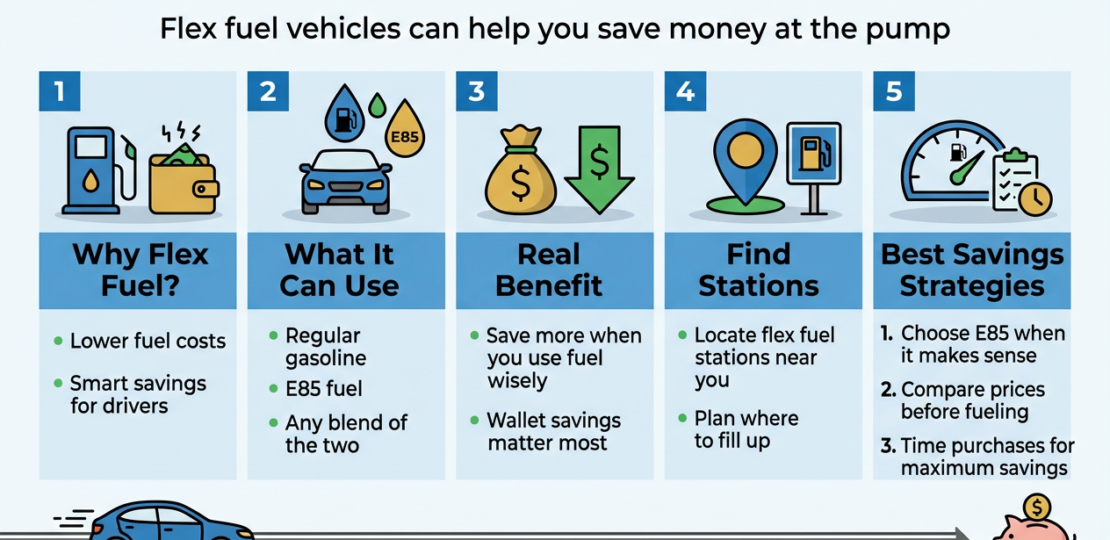
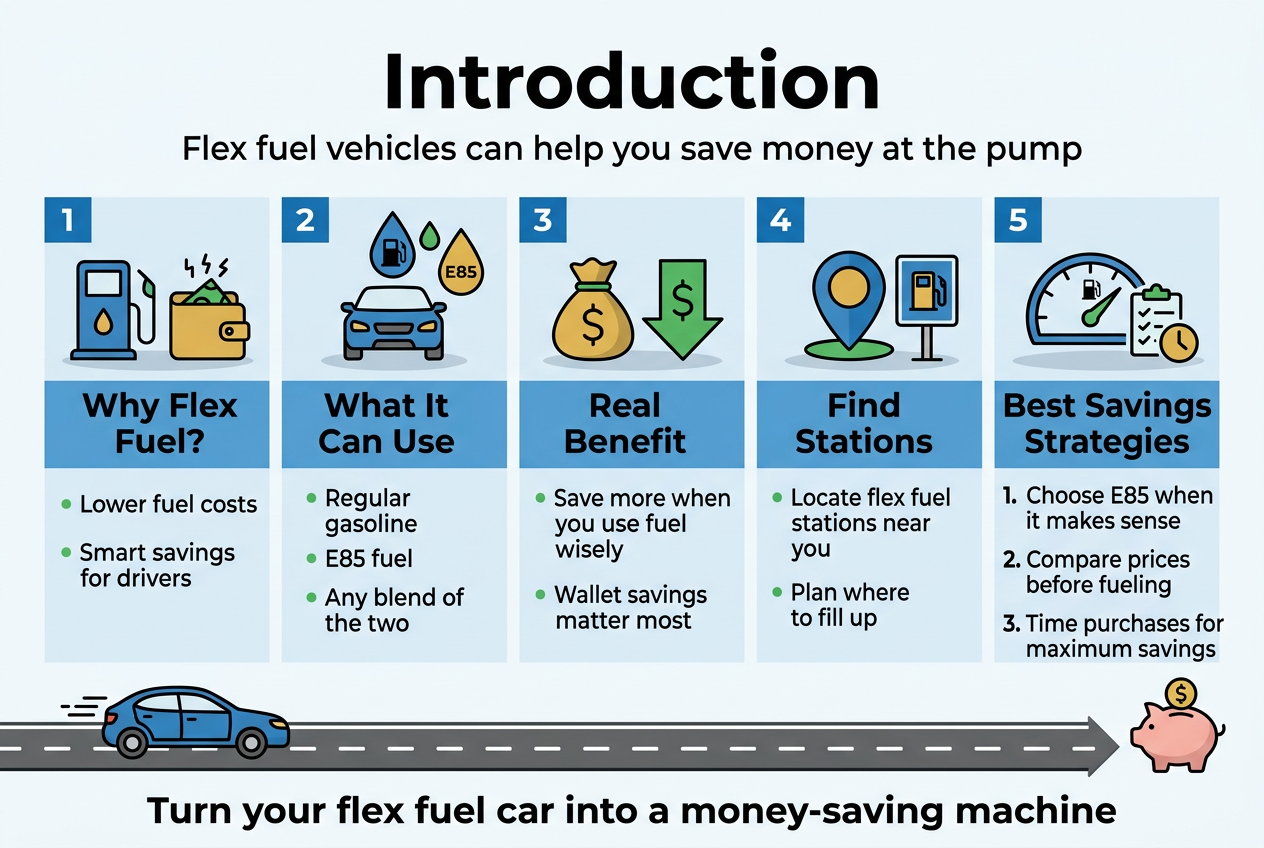
Gas prices got you stressed? Flex fuel vehicles might be your ticket to serious savings at the pump. This guide is for current flex fuel car owners who want to maximize their savings, plus anyone considering buying a flex fuel vehicle to cut their gas expenses.
Flex fuel technology lets your car run on regular gasoline, E85 fuel, or any blend of the two. While flex-fuel vs. regular-gas debates focus on performance, the real win is in your wallet when you know how to use that flexibility smartly.
We’ll break down exactly how flex fuel benefits your budget, show you the best ways to find flex fuel stations near you, and share proven strategies to boost your flex fuel economy. You’ll also learn when to choose E85 fuel over regular gas and how to time your purchases for maximum savings.
Ready to turn your flex fuel car into a money-saving machine? Let’s dive into the practical steps that will have you spending less on fuel starting today.
Understanding Flex Fuel Technology and How It Works
What flex fuel vehicles are and their engine capabilities
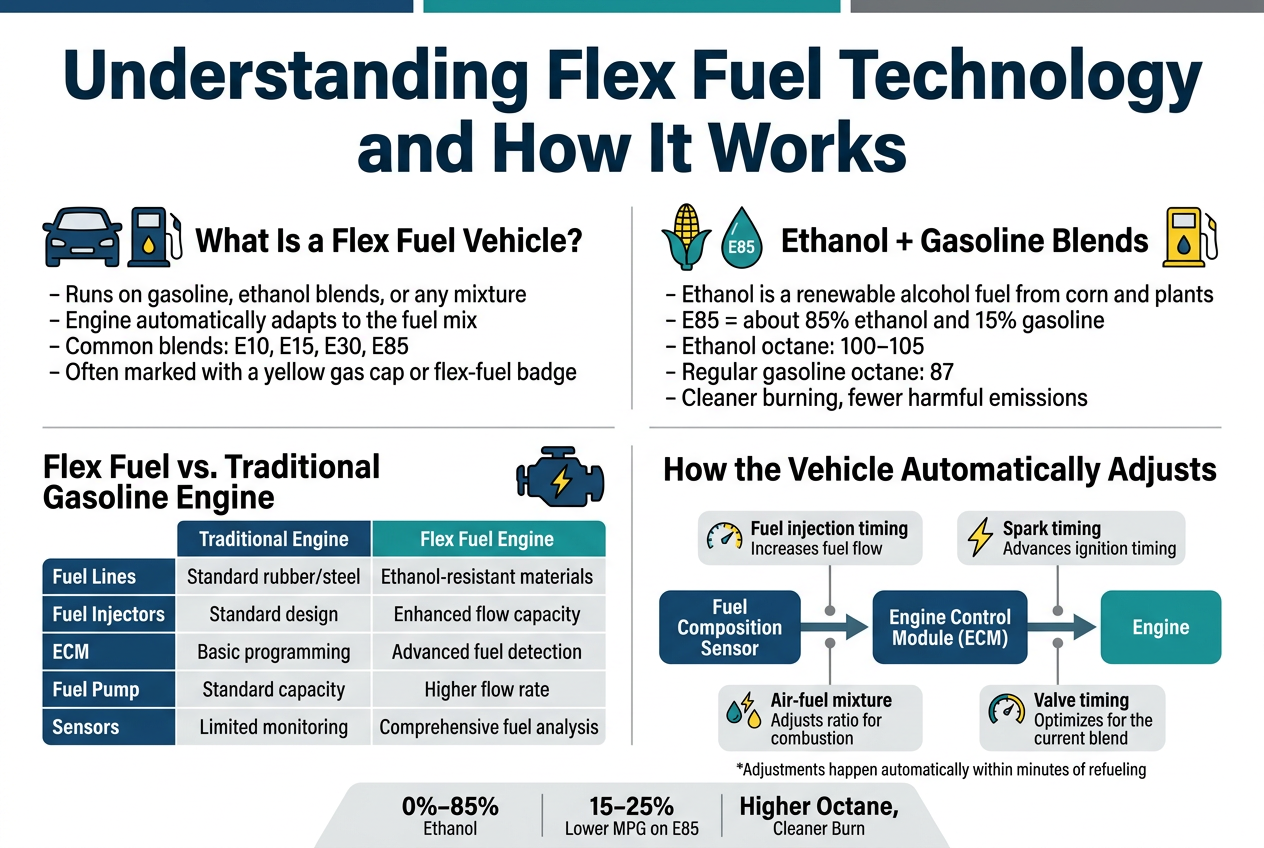
Flex fuel vehicles, also known as FFVs, are specially designed cars that can run on multiple fuel types without any modifications. These vehicles feature engines built to handle gasoline, ethanol blends like E85 fuel, or any mixture of the two. The “flex” in flex fuel comes from this flexibility to switch between different fuel compositions seamlessly.
Most modern flex fuel vehicles can operate on fuel containing anywhere from 0% to 85% ethanol content. This means you can fill up with regular gasoline (E10, which contains 10% ethanol), mid-level blends like E15 or E30, or high-ethanol E85 fuel. The engine automatically detects and adjusts to whatever fuel mixture you’ve chosen.
Major automakers like Ford, Chevrolet, Dodge, and Toyota manufacture flex fuel vehicles across various model lines. These cars look identical to their conventional counterparts but include specific engine components designed to withstand ethanol’s corrosive properties. You’ll typically find a yellow gas cap or special badging indicating the vehicle’s flex fuel capability.
The science behind ethanol-gasoline blends
Ethanol fuel is an alcohol-based renewable fuel produced primarily from corn and other plant materials. When mixed with gasoline, it creates different blend ratios that offer varying performance characteristics. E85 fuel contains roughly 85% ethanol and 15% gasoline, though this ratio can fluctuate seasonally between 70% and 85% ethanol depending on climate conditions.
The octane rating of ethanol is significantly higher than that of gasoline – around 100-105, compared to regular gasoline’s 87 octane. This higher octane allows engines to run more efficiently and with better performance. Ethanol also burns cleaner than pure gasoline, producing fewer harmful emissions and reducing your vehicle’s environmental impact.
However, ethanol contains less energy per gallon than gasoline. While regular gasoline provides about 115,000 BTUs per gallon, ethanol delivers roughly 76,000 BTUs. This energy difference affects fuel economy, typically resulting in 15-25% lower miles per gallon when using E85 compared to regular gasoline.
Key differences between flex fuel and traditional gasoline engines
Flex fuel vehicles include several engine modifications that set them apart from conventional gasoline engines. The fuel system components are constructed with materials resistant to ethanol’s corrosive effects. Stainless steel fuel lines, special seals, and corrosion-resistant fuel injectors prevent damage from long-term ethanol exposure.
| Component | Traditional Engine | Flex Fuel Engine |
|---|---|---|
| Fuel Lines | Standard rubber/steel | Ethanol-resistant materials |
| Fuel Injectors | Standard design | Enhanced flow capacity |
| Engine Control Module | Basic programming | Advanced fuel detection |
| Fuel Pump | Standard capacity | Higher flow rate |
| Sensors | Limited monitoring | Comprehensive fuel analysis |
- The engine control module (ECM) in flex fuel vehicles is programmed with sophisticated software that can detect different fuel compositions and adjust engine parameters accordingly. This includes modifying fuel injection timing, spark advance, and air-fuel ratios to optimize performance regardless of the ethanol content.
How does your vehicle automatically adjust to different fuel mixtures
Your flex fuel vehicle uses an advanced sensor system to analyze the fuel composition in real-time. The primary fuel composition sensor, usually located in the fuel line, measures the ethanol content and sends this information to the engine control module. This process happens continuously while you’re driving, ensuring optimal performance regardless of fuel changes.
When you switch from regular gasoline to E85 fuel, the ECM automatically makes several adjustments:
- Fuel injection timing: The system increases fuel flow to compensate for ethanol’s lower energy content
- Spark timing: Ignition timing advances to take advantage of ethanol’s higher octane rating
- Air-fuel mixture: The engine adjusts the air-to-fuel ratio for complete combustion
- Valve timing: Variable valve timing systems optimize for the current fuel blend
These adjustments happen within minutes of refueling, though you might notice slight performance variations during the transition period. The system constantly monitors engine performance and makes micro-adjustments to maintain smooth operation. This automatic adaptation means you never need to manually configure anything – simply fill up with your preferred fuel and drive normally.
Financial Benefits of Using Flex Fuel in Your Vehicle
Immediate Cost Savings at the Pump with E85 Pricing
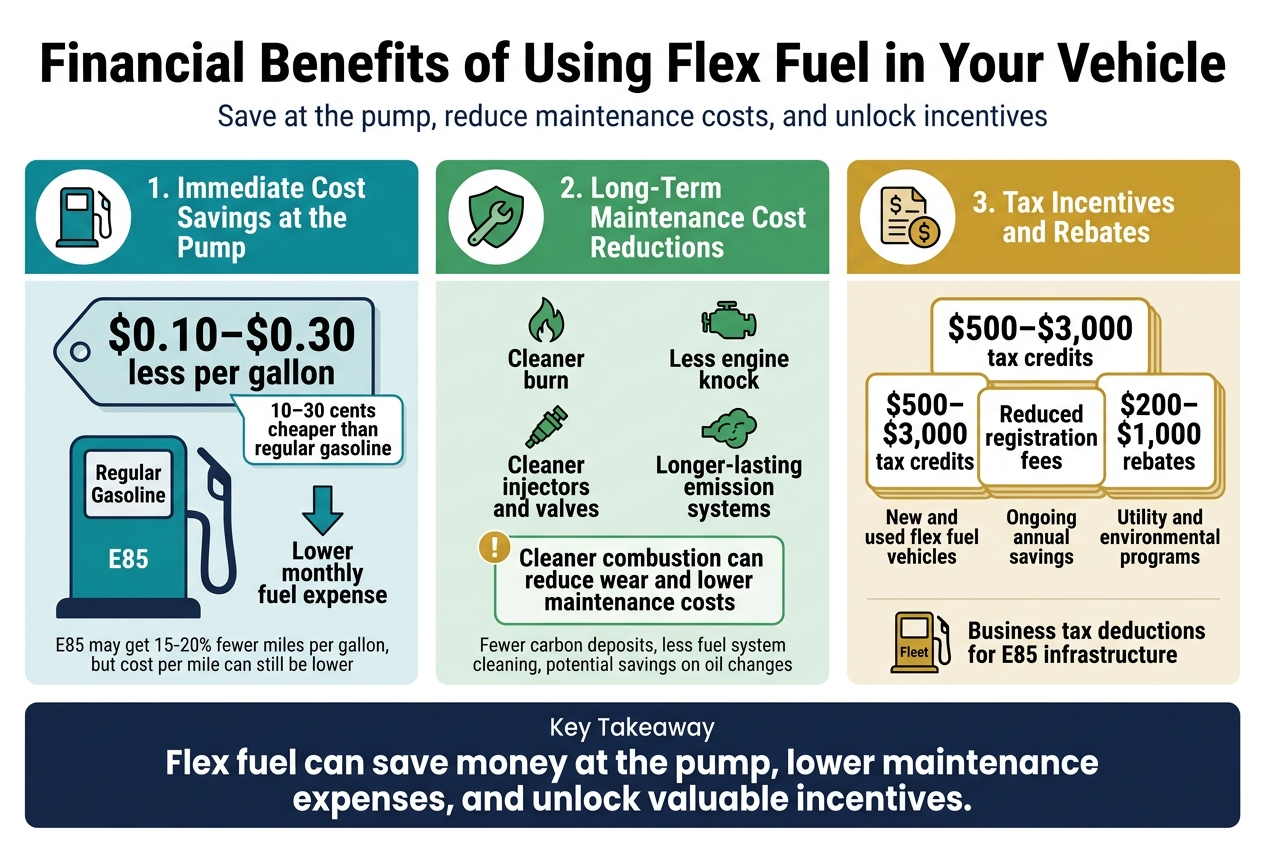
E85 fuel typically costs 10-30 cents less per gallon than regular gasoline, creating instant savings every time you fill up your flex fuel vehicle. This price difference stems from government subsidies for ethanol production and lower refining costs compared to traditional gasoline. The actual savings vary by region and market conditions, but most flex fuel drivers see noticeable reductions in their monthly fuel expenses.
The price gap becomes even more significant during periods of high oil prices. When crude oil costs spike, E85 prices remain relatively stable since ethanol production doesn’t depend on petroleum markets. During recent gas price surges, some drivers reported saving $15-25 per tank when choosing E85 over regular gas at flex fuel stations.
Keep in mind that while E85 delivers immediate cost benefits, it provides slightly lower fuel economy than regular gasoline. Your flex fuel vehicle may get 15-20% fewer miles per gallon with E85, but the lower pump price often offsets this difference. Smart drivers track their cost per mile rather than just price per gallon to maximize their savings.
Long-term Maintenance Cost Reductions
Ethanol fuel burns cleaner than traditional gasoline, leading to several maintenance advantages for flex fuel vehicles. The higher octane rating of E85 reduces engine knock and allows for more efficient combustion, which can extend engine life and reduce wear on critical components.
Regular E85 use helps keep fuel injectors and intake valves cleaner compared to gasoline. Ethanol acts as a natural solvent, breaking down carbon deposits that accumulate over time. This cleaning effect means fewer fuel system problems and less frequent need for expensive fuel system cleanings at the dealership.
Many flex-fuel vehicle owners report extended intervals between oil changes when primarily using E85. The cleaner burn characteristics mean less contamination in the engine oil, though you should always follow your manufacturer’s maintenance schedule regardless of fuel type.
The reduced emissions from ethanol combustion also put less strain on your vehicle’s catalytic converter and other emission control systems. These components typically last longer in flex fuel vehicles that regularly use E85, saving hundreds of dollars in replacement costs over the vehicle’s lifetime.
Tax Incentives and Rebates Available for Flex Fuel Users
Several states offer tax credits for flex fuel vehicle purchases, with incentives ranging from $500 to $3,000 depending on your location. These credits apply to both new and used flex fuel vehicles, making them accessible to buyers at all price points. Check with your state’s department of revenue for current incentive programs in your area.
Some states provide additional benefits through reduced registration fees for flex fuel vehicles. Colorado, for example, offers lower annual registration costs for vehicles capable of running on alternative fuels. These ongoing savings add up over the years you own your flex fuel car.
Corporate fleet operators can take advantage of federal tax deductions for alternative fuel infrastructure. Businesses that install E85 pumps for their fleet vehicles qualify for substantial tax breaks, making flex fuel an attractive option for commercial operations.
Certain utility companies and environmental organizations offer rebates for drivers who commit to using E85 regularly. These programs reward consumers for reducing petroleum consumption and supporting domestic ethanol production. The rebates typically range from $200 to $1,000 and may require proof of E85 purchases over a specific period.
Finding and Accessing Flex Fuel Stations Near You
Using apps and websites to locate E85 stations
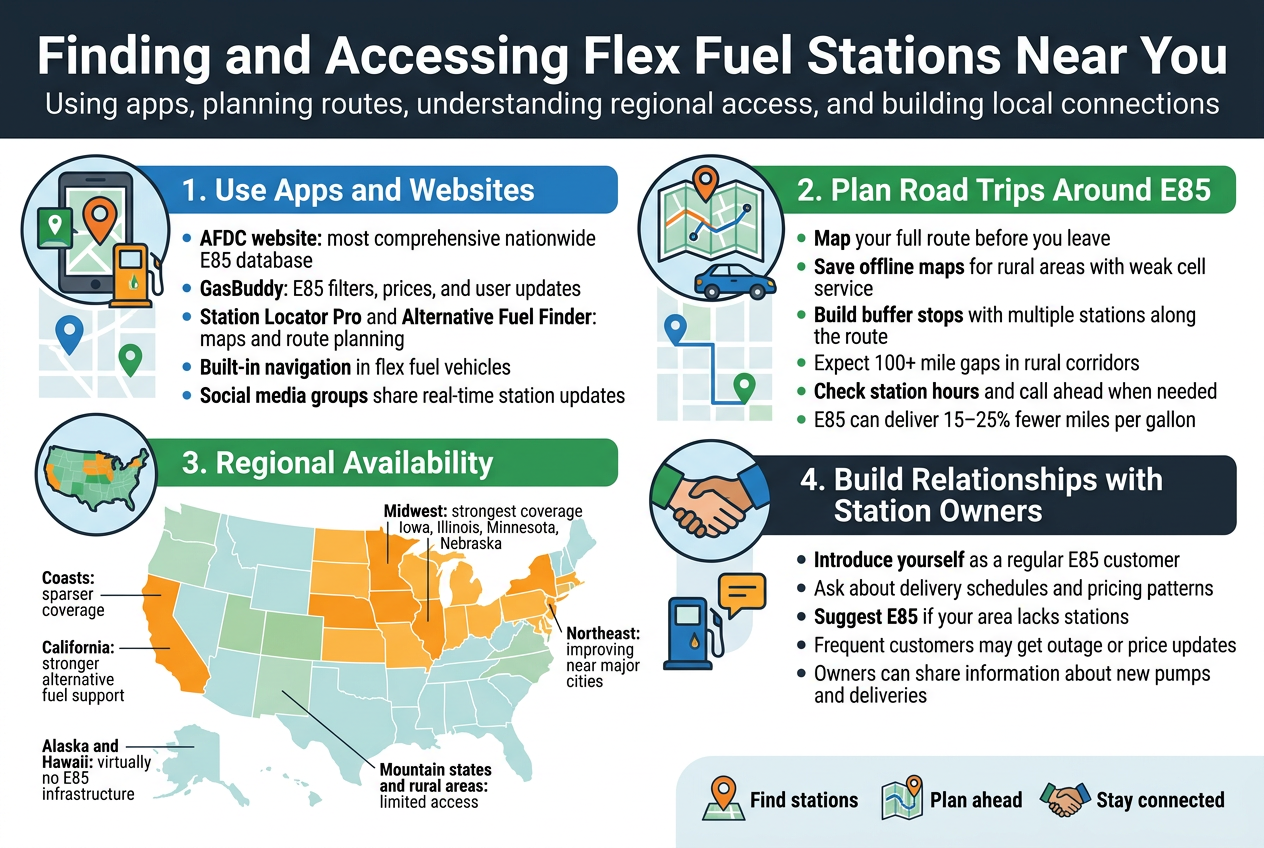
Several smartphone apps and websites make finding flex fuel stations near me much easier than driving around hoping to spot one. The Alternative Fuels Data Center (AFDC) website offers the most comprehensive database of E85 locations nationwide, with real-time updates and detailed station information. Their mobile-friendly site works great on smartphones and provides driving directions, station hours, and fuel availability status.
Popular apps like GasBuddy now include E85 station filters, letting you search specifically for flex fuel options while comparing prices. The app shows user-reported prices and recent updates, helping you find the cheapest E85 fuel in your area. Station Locator Pro and Alternative Fuel Finder are dedicated apps that focus exclusively on alternative fuel stations, offering detailed maps and route planning features.
Many flex fuel vehicles also come with built-in navigation systems that can locate E85 stations. Ford’s SYNC system, for example, includes a specific search function for ethanol stations. These factory systems often integrate with your fuel gauge, alerting you when you’re running low and automatically searching for nearby stations.
Social media groups and forums dedicated to flex fuel enthusiasts often share real-time station updates, price changes, and new location openings. These communities provide valuable insider knowledge about which stations consistently stock E85 and which ones frequently run out.
Planning road trips around flex fuel availability
Road trip planning requires extra attention when you drive a flex fuel vehicle since E85 stations are less common than regular gas stations. Start by mapping your entire route using the AFDC website or dedicated apps, identifying all available stations along your path and noting their distance intervals. Print or save offline maps showing these locations since cell service can be spotty in rural areas where E85 availability often drops significantly.
Build a buffer strategy by locating multiple stations within reasonable detours of your planned route. Rural highways and interstate corridors often have gaps of 100+ miles between E85 stations, so plan fuel stops accordingly. Keep track of station hours, too – many smaller stations close earlier than major chain locations, and some rural stations might have limited weekend hours.
Consider your vehicle’s flex fuel economy when calculating distances. E85 typically provides 15-25% fewer miles per gallon compared to regular gasoline, so factor this into your range calculations. Pack a physical road atlas or download offline maps showing all fuel stations as backup – you can always fill up with regular gas if E85 isn’t available.
Smart travelers often call ahead to confirm E85 availability, especially for stations in remote areas. Some stations occasionally run out of ethanol fuel during peak travel seasons or due to delivery delays.
Understanding regional availability differences
Flex fuel stations cluster heavily in the Midwest, where corn production makes ethanol fuel more economical and politically supported. States like Iowa, Illinois, Minnesota, and Nebraska have excellent E85 coverage with stations every 20-30 miles on major routes. These corn belt states often offer the most competitive E85 pricing due to local production and favorable state policies.
Coastal regions typically have much sparser coverage, with California being an exception due to environmental regulations that encourage alternative fuels. The Northeast has improving availability around major metropolitan areas, but rural coverage remains spotty. Southern states show mixed patterns – Texas has good coverage due to its size and energy industry, while other southern states lag.
Mountain states and rural areas present the biggest challenges for E85 access. Wyoming, Montana, and Nevada have very limited stations, mostly concentrated around larger cities. Alaska and Hawaii have virtually no E85 infrastructure, making them unsuitable for flex fuel road trips.
Urban areas generally offer better access than rural locations, but this isn’t universal. Some major cities still have limited E85 options despite having numerous gas stations. Research your specific metropolitan area since availability can vary dramatically between seemingly similar cities.
Building relationships with local station owners
Developing connections with local station owners and managers can significantly improve your flex fuel experience. Independent stations often provide more personalized service and flexibility compared to corporate chains. Introduce yourself as a regular E85 customer and ask about delivery schedules, pricing patterns, and any plans for expanded ethanol fuel availability.
Many station owners appreciate customer feedback about E85 demand and may consider adding or maintaining ethanol pumps based on demonstrated local interest. If your area lacks E85 stations, politely inquire about the possibility of adding this fuel option. Share information about the growing flex fuel vehicles market and potential customer base.
Regular customers often receive advance notice about price changes, delivery delays, or temporary outages. Some station owners text or call their frequent E85 customers when fresh deliveries arrive or when prices drop significantly. Building these relationships also helps during supply shortages when stations might reserve available E85 for their best customers.
Station managers can provide valuable insights about optimal fill-up times, seasonal availability patterns, and upcoming infrastructure changes. They often know about new stations opening in the area or existing stations planning to add E85 pumps.
Maximizing Your Fuel Economy with Flex Fuel
Optimal Driving Techniques for Ethanol Blends
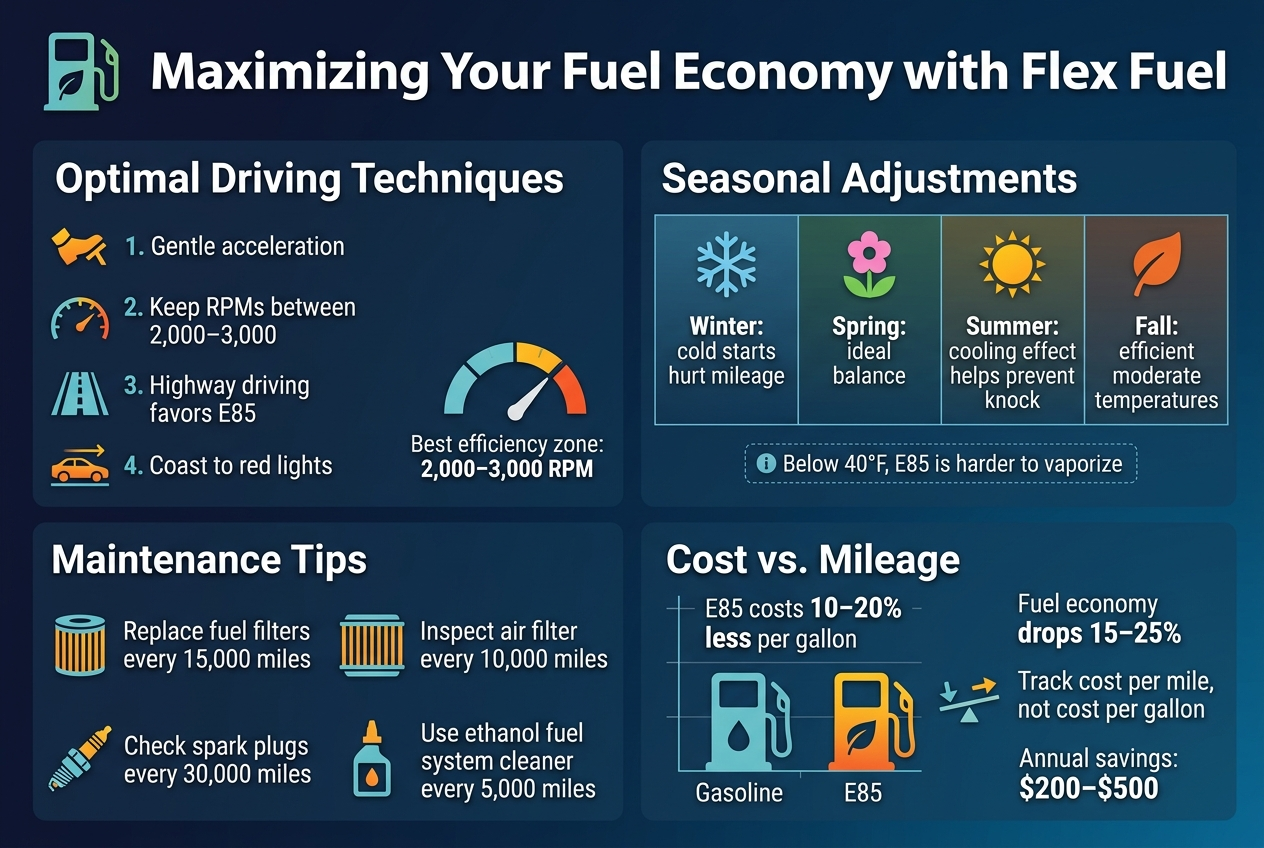
Flex fuel vehicles perform differently with E85 compared to regular gasoline, and adjusting your driving style can significantly improve your fuel economy. Gentle acceleration is your best friend when running on ethanol blends. The higher octane rating of E85 allows for more aggressive engine timing, but smooth, gradual acceleration helps you tap into those efficiency gains without burning through fuel unnecessarily.
Keep your RPMs in the sweet spot between 2,000 and 3,000 when possible. This range typically delivers the best balance between power and efficiency for most flex fuel engines. Highway driving actually favors E85 more than city driving due to the consistent engine load, so plan longer trips when your tank is full of ethanol fuel.
Anticipate traffic patterns and coast to red lights instead of braking hard and accelerating again. This technique becomes even more valuable with E85 since ethanol fuel contains about 30% less energy per gallon than gasoline. Every bit of momentum you preserve translates to better mileage.
Seasonal Adjustments for Better Mileage
Cold weather hits flex-fuel economy harder than regular gasoline vehicles. Ethanol has a higher heat of vaporization, meaning your engine needs more energy to get E85 burning efficiently when temperatures drop below 40°F. During winter months, consider mixing in more regular gasoline or switching to lower ethanol blends if your area offers E30 or E50 options.
Summer driving with E85 actually offers some advantages. The cooling effect of ethanol can help prevent knock in hot weather, allowing your engine to run more efficiently. You might notice better performance and slightly improved mileage during warmer months, especially if you’re driving in stop-and-go traffic where engine temperatures typically run higher.
Spring and fall represent the ideal seasons for maximizing flex fuel benefits. Moderate temperatures allow ethanol to vaporize efficiently while avoiding the cold-start penalties of winter driving.
Maintenance Tips to Improve Flex Fuel Efficiency
Your fuel system needs extra attention when regularly running E85 fuel. Ethanol attracts moisture and can cause corrosion in older fuel lines and components. Replace fuel filters more frequently – every 15,000 miles instead of the standard 30,000-mile intervals. This prevents clogged injectors that can hurt both performance and fuel economy.
Keep your air filter clean and inspect it every 10,000 miles. E85 requires more airflow than gasoline to maintain proper combustion ratios. A dirty air filter forces your engine to work harder and burns more fuel in the process.
Check your spark plugs every 30,000 miles rather than waiting for the standard replacement interval. Ethanol burns hotter and can cause plugs to wear out faster. Fresh plugs ensure complete combustion and prevent the misfires that waste fuel and reduce power.
Consider using a fuel system cleaner designed for ethanol fuels every 5,000 miles. These additives help prevent the buildup of deposits that can form when ethanol sits in your fuel system for extended periods.
Understanding the Trade-off Between Cost and Mileage
The math on flex fuel savings isn’t always straightforward. While E85 typically costs 10-20% less per gallon than regular gasoline, you’ll see a 15-25% decrease in fuel economy depending on your vehicle and driving conditions. This means your actual savings per mile might be smaller than the pump price difference suggests.
Track your real-world costs by calculating cost per mile rather than cost per gallon. Fill up with E85, reset your trip odometer, and divide your total fuel cost by miles driven. Do the same calculation with regular gasoline over a similar driving period to see your true savings.
The sweet spot for flex fuel benefits often comes during periods when gas prices spike but ethanol prices remain stable. During these times, the cost advantage of E85 can overcome the mileage penalty and deliver genuine savings. Many flex fuel vehicle owners report saving $200-500 annually by switching between fuels based on price spreads at their local flex fuel stations.
Consider your driving patterns when deciding between fuels. If you’re planning a long highway trip, the reduced range of E85 might require an extra fuel stop, potentially eating into your savings. For daily commuting and local driving, the convenience factor usually works in favor of whatever fuel offers the best value at nearby stations.
Smart Flex Fuel Purchasing Strategies
Timing Your Fill-ups for Maximum Savings
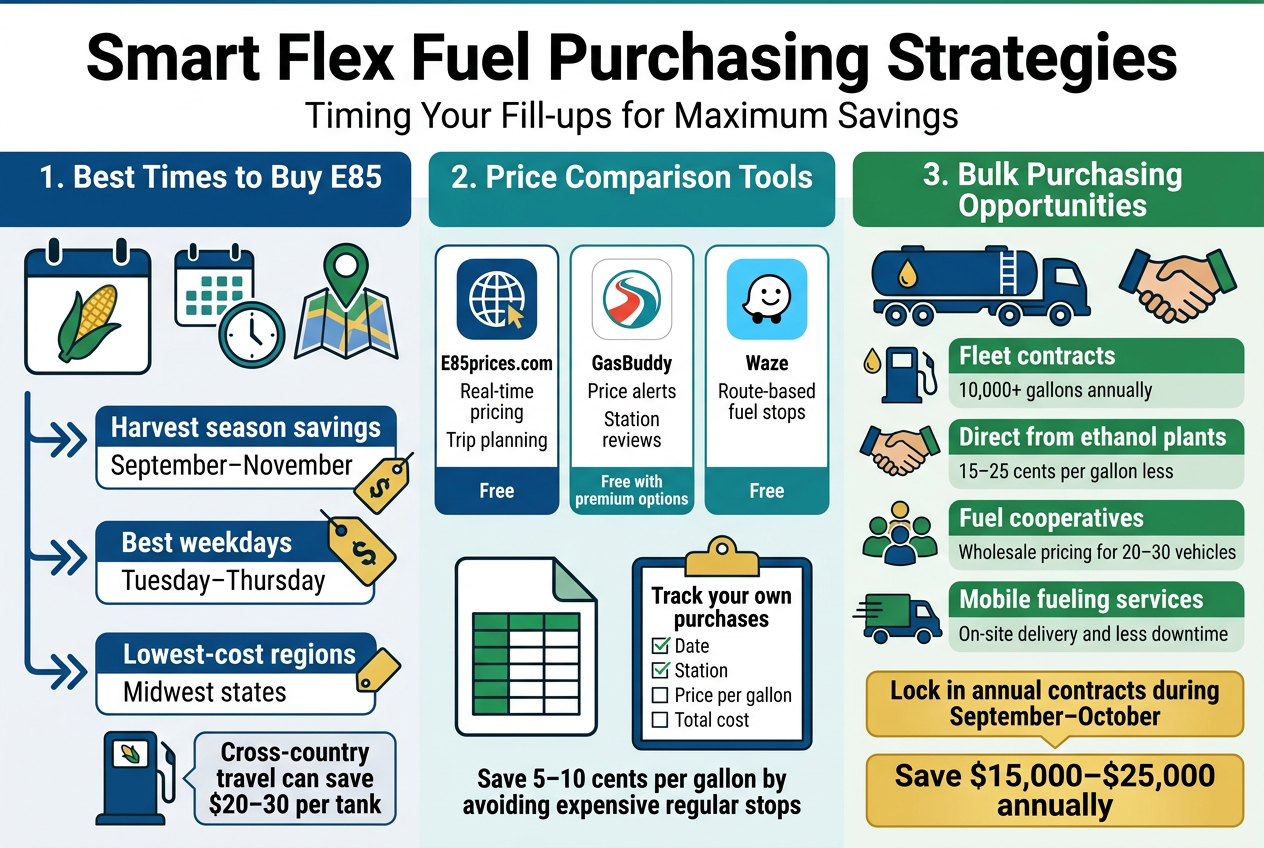
E85 fuel prices follow different patterns than regular gasoline, creating unique money-saving opportunities for flex fuel vehicle owners. The ethanol market operates on agricultural cycles, with prices typically dropping during harvest season (September through November) when corn supply peaks. Smart drivers track these seasonal trends to stock up when E85 hits its lowest annual prices.
Weekly pricing patterns also work in your favor. Tuesday through Thursday often see the lowest prices at flex fuel stations, while weekend demand drives costs up. Avoid Monday fill-ups when stations adjust prices after weekend sales data comes in.
Watch for regional pricing disparities, too. Midwest states with heavy corn production consistently offer cheaper E85 than coastal areas. Plan longer trips around fuel stops in these lower-cost regions. Some drivers save $20-30 per tank simply by timing their fill-ups during cross-country travel.
Price Comparison Tools and Tracking Methods
Modern technology makes finding the cheapest E85 effortless. The E85prices.com website and mobile app provide real-time pricing data from thousands of flex fuel stations nationwide. Users can search by ZIP code, set price alerts, and even report price changes to keep data current.
GasBuddy’s platform includes extensive E85 tracking features. Set up price alerts for stations near your home, work, and regular travel routes. The app sends notifications when prices drop below your target threshold.
| Tool | Key Features Cost | t |
|---|---|---|
| E85prices.com | Real-time pricing, trip planning | Free |
| GasBuddy | Price alerts, station reviews | Free with premium options |
| Waze | Route-based fuel stops | Free |
Create a simple spreadsheet to track your personal E85 purchases. Record date, station, price per gallon, and total cost. This data helps identify your best local stations and optimal purchasing patterns. Many drivers discover they save an extra 5-10 cents per gallon just by avoiding their most expensive regular stops.
Bulk Purchasing Opportunities for Fleet Owners
Fleet operators with flex fuel vehicles unlock significant savings through bulk E85 purchasing agreements. Many ethanol producers offer direct contracts for fleets consuming 10,000+ gallons annually. These arrangements typically reduce costs by 15-25 cents per gallon compared to retail stations.
Contact local ethanol plants directly to negotiate pricing. Smaller producers often welcome fleet partnerships and offer competitive rates with flexible delivery schedules. Some facilities provide on-site fueling infrastructure installation, eliminating trips to public stations.
Fuel cooperatives present another avenue for savings. Join with other local businesses to create buying groups that qualify for wholesale pricing. Even modest fleets of 20-30 vehicles can access better rates through cooperative purchasing power.
Consider mobile fueling services for large operations. Companies like Booster and WEX offer on-site E85 delivery, saving time while often beating retail prices. The convenience factor alone justifies the service for many fleet managers, especially when factoring in reduced vehicle downtime and driver productivity gains.
Timing bulk purchases around harvest season maximizes savings potential. Lock in annual contracts during September-October when ethanol prices hit seasonal lows. Some fleet operators save $15,000-25,000 annually through strategic bulk purchasing combined with optimal contract timing.
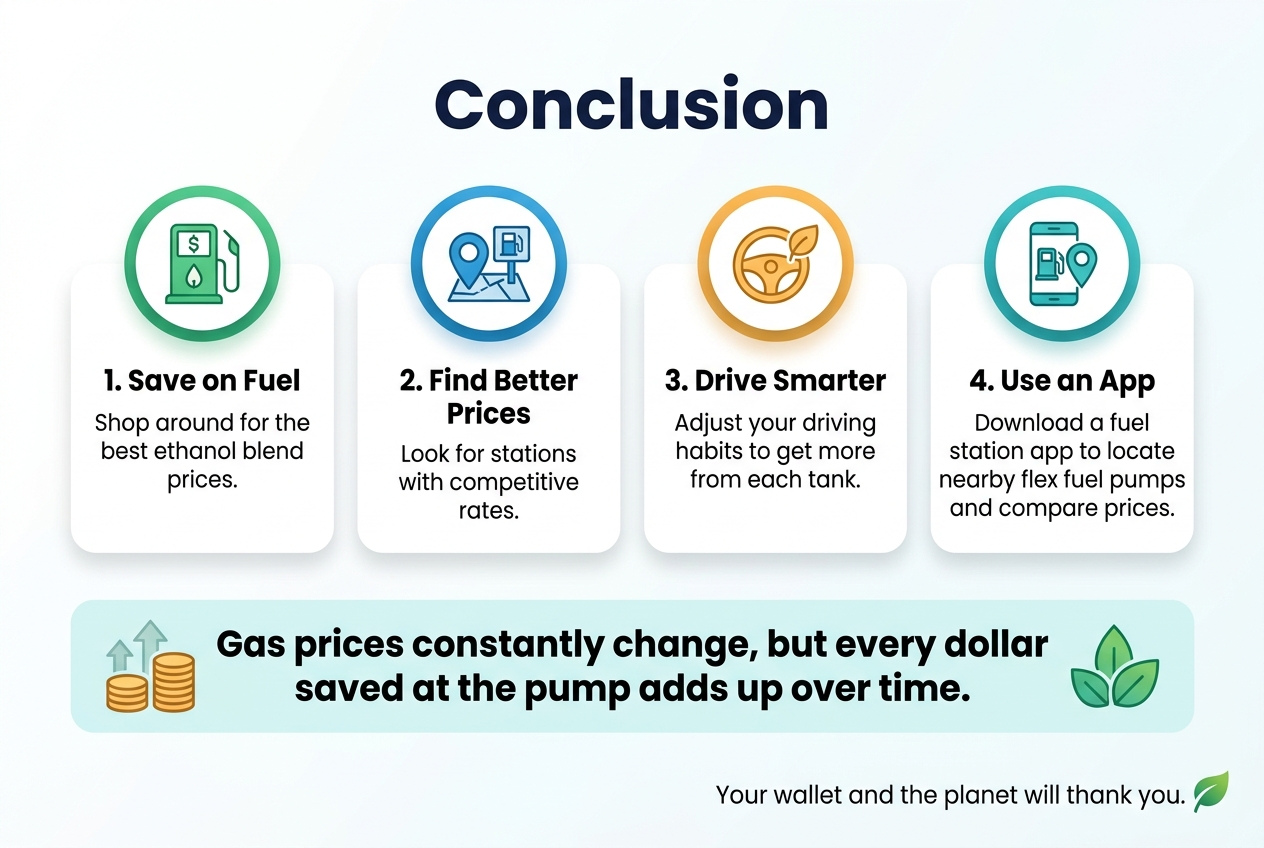
Flex fuel technology gives drivers a real chance to cut down on their gas expenses while helping the environment. You can save money by shopping around for the best ethanol blend prices, finding stations with competitive rates, and adjusting your driving habits to get the most out of each tank. The key is understanding how your flex fuel vehicle works and making smart choices about where and when you fill up.
Ready to start saving? Download a fuel station app today to locate nearby flex fuel pumps and compare prices in your area. With gas prices constantly changing, every dollar you save at the pump adds up to real money in your pocket over time. Your wallet and the planet will thank you for making the switch to smarter fuel choices.
RELATED POSTS
View all

