
Daily Routine Mastery: 10 Simple Habits to Build the Perfect Day for Success
June 11, 2026 | by support@rabgcontent.com
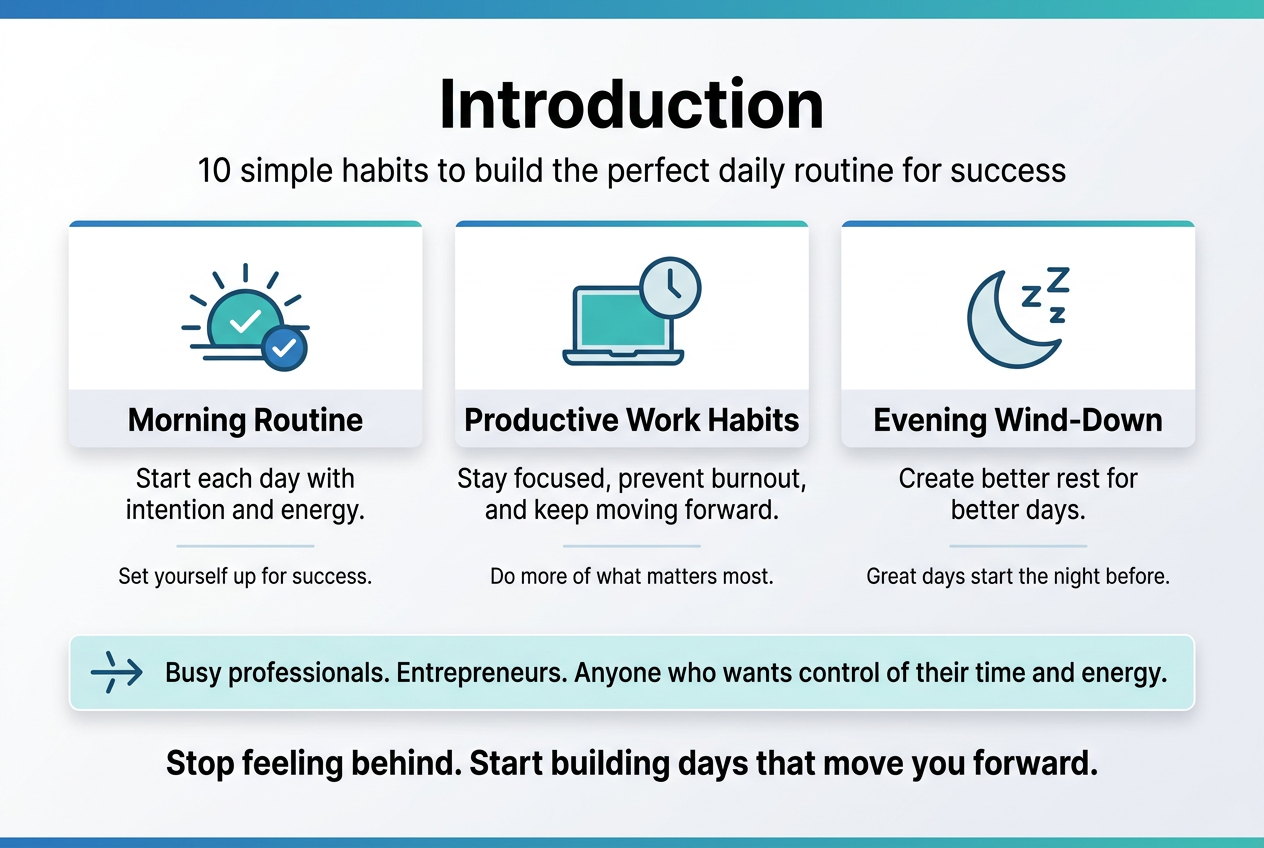
Do you ever reach the end of the day wondering where all your time went? You’re not alone. Building 10 simple habits to build the perfect daily routine for success can transform scattered, stressful days into focused, fulfilling ones.
This guide is for busy professionals, entrepreneurs, and anyone who wants to take control of their time and energy. You don’t need complex systems or hours of planning—just smart, sustainable habits that actually work.
We’ll walk through creating a morning routine that sets you up for success, helping you start each day with intention and energy. You’ll discover productive work habits that prevent burnout while keeping you focused on what matters most. Plus, we’ll cover how to establish an evening wind-down routine for better sleep, because great days start with great rest the night before.
Ready to stop feeling like you’re always behind and start building days that move you forward? Let’s dive into the daily habits that work.
Create a Morning Daily Routine That Sets You Up for Success
“Daily Routine: Wake Up Early for Quiet Focus Time”
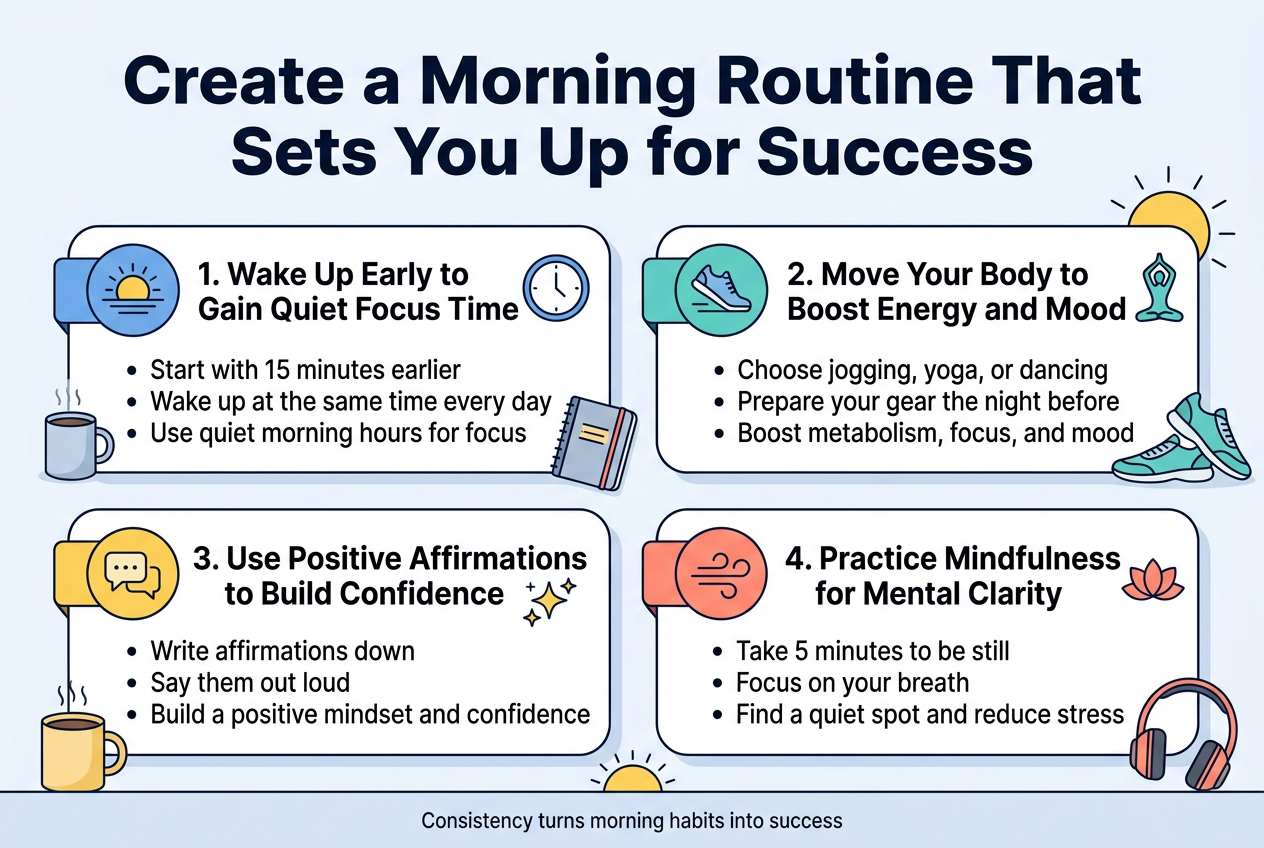
Waking up early offers tranquil hours, minimal distractions, and a chance to focus solely on yourself before daily demands kick in. These precious morning hours become your sanctuary for building a daily routine for success without the interruptions that inevitably arise later in the day.
To make waking up early happen effectively, start slowly by setting your alarm 15 minutes earlier and gradually increasing the time. This gentle approach prevents the shock to your system that often leads to abandoning new morning routine habits altogether.
Consistency is vital for establishing this foundation of your daily routine. Wake up at the same time every day, including weekends, to regulate your body’s circadian rhythm. This consistency trains your body to naturally wake at your desired time, making early mornings feel less forced and more natural.
“Daily Routine: Move Your Body to Boost Energy and Mood”
Morning physical activity boosts metabolism, sharpens focus, and improves mood, setting a positive tone for your entire day. This movement component is essential for building successful habits that energize rather than drain you.
Choose a preferred activity like jogging, yoga, or dancing, and make it accessible by preparing your gear the night before. This preparation removes barriers that might prevent you from following through with your morning movement routine.
“Make Positive Affirmations a Daily Routine to Build Confidence”
Speaking positively to yourself through affirmations can improve your mindset and confidence levels. Write down your affirmations to use as a quick reference, ensuring you have them readily available during your morning routine.
Say your affirmations out loud, focusing on each word for deeper impact. This vocal engagement strengthens the neural pathways associated with positive self-talk and confidence building.
“Make Mindfulness a Daily Routine for Better Mental Clarity”
Taking even five minutes to be still and practice mindfulness can significantly influence your day. Mindfulness enhances awareness of your thoughts and feelings, making day-to-day management easier and more intentional.
Find a quiet spot for mindfulness, such as your living room, car, or even in the shower. Focus on your breath to calm the nervous system and reduce stress, potentially layered with activities like sipping coffee or listening to music for a more integrated approach to morning mindfulness.
“Design a Daily Routine with Productive Work Habits That Prevent Burnout”
“Align Your Daily Routine with Natural Energy Cycles for Peak Performance.
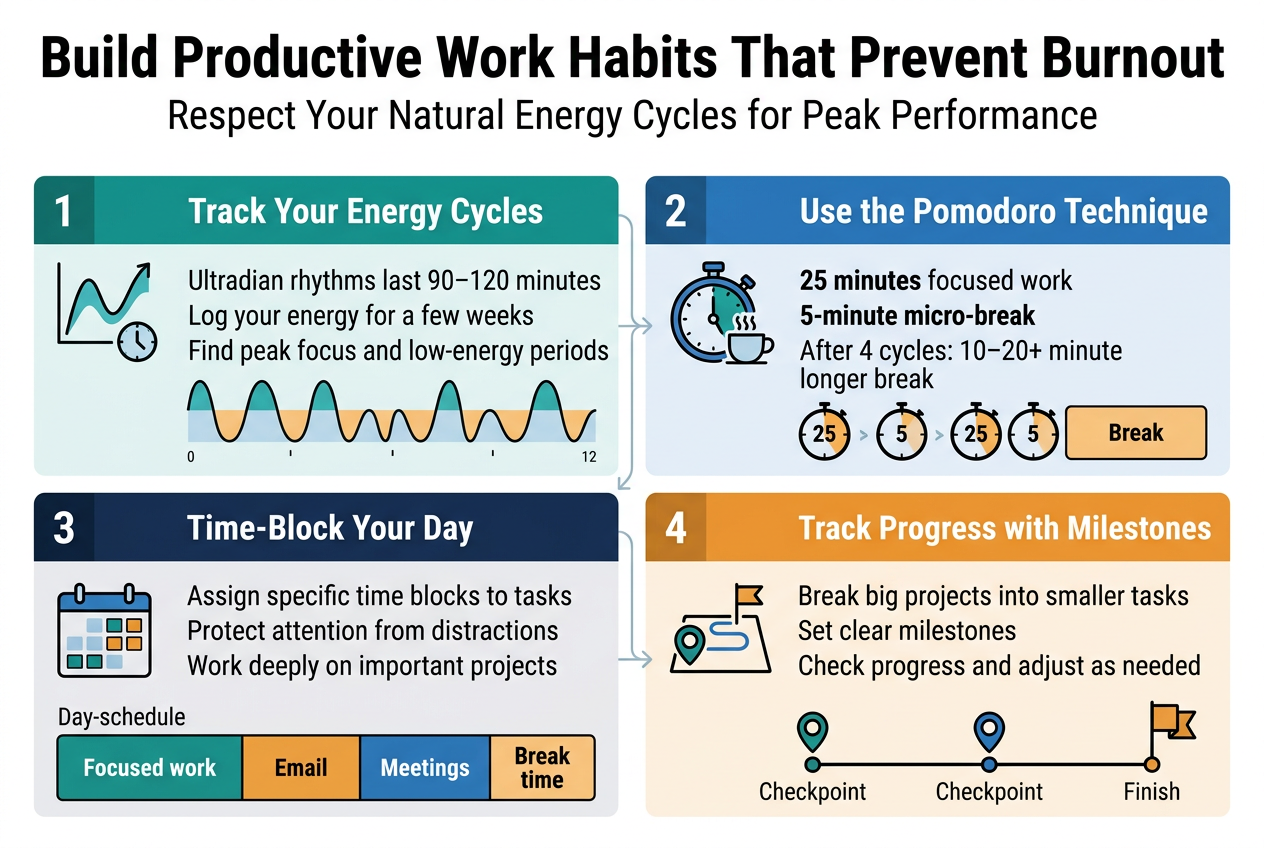
Your body operates on natural ultradian rhythms, lasting 90 to 120 minutes, moving between high and low energy states throughout the day. Understanding these energy cycles becomes crucial when building productive work habits that sustain long-term success without leading to burnout.
The key to maximizing your performance lies in tracking your energy levels using an activity log to identify peak times of alertness and focus. By monitoring your natural rhythms over a few weeks, you’ll discover patterns that reveal when your mind is sharpest and when it naturally seeks rest.
Once you’ve identified these patterns, schedule demanding or creative tasks during peak energy times and reserve less demanding tasks for low-energy periods. This strategic alignment with your body’s natural cycles ensures you’re working with, rather than against, your biological programming.
“Add the Pomodoro Technique to Your Daily Routine for Strategic Breaks”
Micro-breaks are crucial for sustainable productivity, giving your mind the rest it needs while improving focus and reducing burnout likelihood. The Pomodoro Technique offers a structured approach to incorporating these essential breaks into your daily routine for success.
This method involves working in 25-minute bursts, followed by a 5-minute break. The focused work periods maintain high concentration while the brief breaks prevent mental fatigue from accumulating. After completing four Pomodoro cycles, take a longer break of 10-20+ minutes to fully recharge your mental resources.
“Integrate Time-Blocking into Your Daily Routine to Minimize Distractions”
Time-blocking involves assigning specific blocks of time to different tasks or types of work, leading to better focus and enhanced productivity. This technique creates structure within your day while protecting your attention from the constant pull of distractions.
When implementing time-blocking as part of your productive work habits, dedicate specific hours to particular activities rather than jumping between tasks randomly. This approach allows for deeper focus and more meaningful progress on important projects.
“Make Tracking Progress with Clear Milestones a Daily Routine”
Breaking down larger projects into smaller tasks and setting milestones helps you effectively track your progress while maintaining motivation. Clear milestones provide regular checkpoints that confirm you’re moving in the right direction and help identify when adjustments are needed in your approach.
“Make an Evening Wind-Down a Daily Routine for Better Sleep”
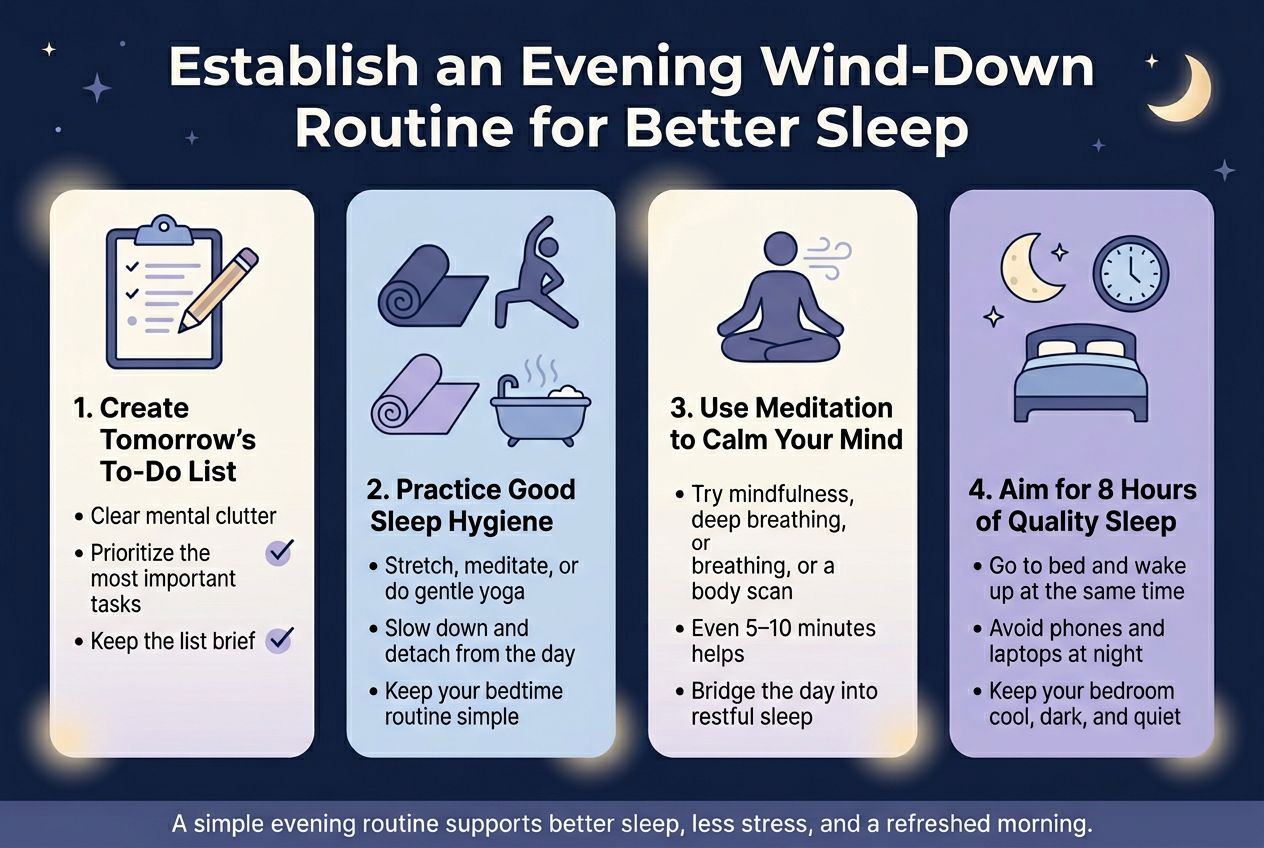
“Make Creating Tomorrow’s To-Do List a Daily Routine to Clear Mental Clutter”
Creating a to-do list for the next day before bed is one of the most effective habits for establishing an evening routine for better sleep. This simple practice helps clear your mind, reduce stress, and makes it significantly easier to fall asleep. When you transfer all the swirling thoughts about tomorrow’s responsibilities onto paper, your brain can finally relax and prepare for rest.
The key to effective evening planning lies in prioritizing tasks appropriately. List your responsibilities in order of importance, ensuring you tackle the most critical items first. However, it’s crucial to keep the list brief to declutter your mind without overwhelming yourself with an entire day’s schedule. This balance between preparation and simplicity is what makes this habit so powerful for your daily routine for success.
“Make Good Sleep Hygiene Habits a Part of Your Daily Routine”
Now that we’ve covered mental preparation, let’s focus on the physical aspects of winding down. Good sleep hygiene involves detaching from your busy day, slowing down, and getting into a restful mindset. This transition from active productivity to peaceful rest is essential for building successful habits that support long-term well-being.
Implement gentle mindful practices such as yoga, stretching, mindfulness, meditation, or taking a hot bath. These activities signal to your body that it’s time to shift gears from the demands of work-life balance habits to restorative sleep. Keep your unique bedtime routine simple, as this simplicity can significantly improve sleep quality and overall well-being.
“Make Meditation a Daily Routine to Calm Your Mind Before Bed”
Previously, I’ve mentioned the importance of mental clarity, and meditation serves as a powerful tool for calming the mind and preparing the body for sleep. Choose a relaxing meditation technique that resonates with you, such as mindfulness meditation, deep breathing exercises, or a body scan practice.
Even a short 5- to 10-minute sleep meditation can have a significant impact on your ability to fall asleep peacefully. This brief investment in mindfulness creates a bridge between your active day and restful night, making it an invaluable component of your evening routine for better sleep.
“Make Aiming for 8 Hours of Quality Sleep a Daily Routine”
With this in mind, let’s examine the foundation of all successful daily habits: adequate sleep duration and quality. Adults should generally aim for around 8 hours of quality sleep, though individual needs may vary slightly. This target isn’t arbitrary—it represents the amount of rest your body and mind require to function optimally.
Set a consistent sleep schedule by going to bed and waking up at the same time every day, even on weekends. This consistency reinforces your body’s natural circadian rhythm and makes falling asleep easier over time. Additionally, avoid blue-light-emitting phones and laptops in the evening to maintain your sleep schedule effectively.
Create a sleep-conducive environment by keeping your bedroom cool, dark, and quiet. These environmental factors signal to your body that it’s time for sleep, supporting the habits for success you’ve been building throughout your day. This attention to your sleep environment completes the foundation of your daily routine structure, ensuring you wake up refreshed and ready to tackle another productive day.
Maximize the Benefits of Daily Routine Structure
“Make Consistent Time Management a Daily Routine to Boost Productivity”
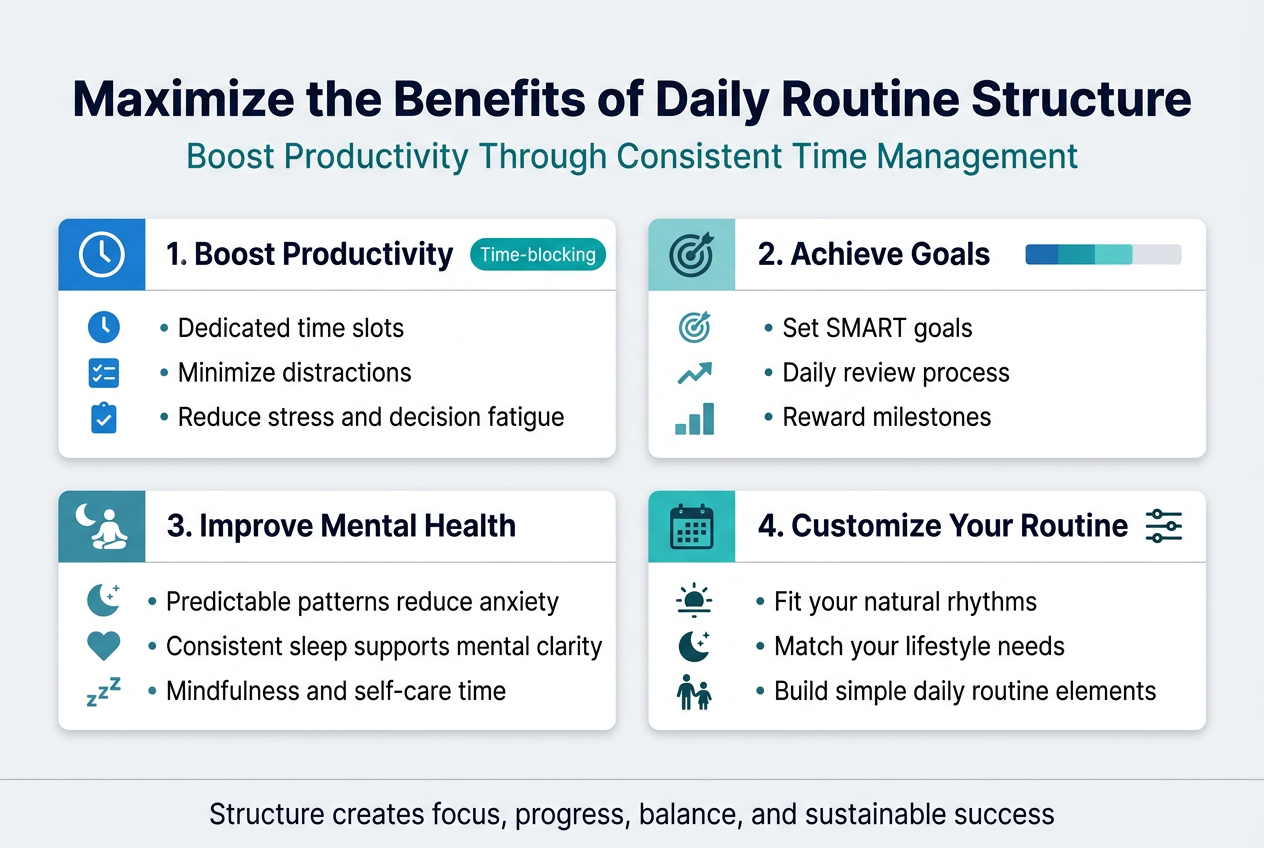
Daily routine structure serves as the foundation for enhanced productivity by creating dedicated time slots for specific tasks, minimizing distractions, and enhancing focus. When you establish consistent time management practices, you develop a systematic approach that naturally reduces stress and helps achieve a healthy work-life balance.
Time-blocking emerges as one of the most effective strategies within your daily routine for success. By assigning specific blocks of time to different tasks or work types, you create improved focus and eliminate the decision fatigue that comes with constantly choosing what to do next. This structured approach ensures that important activities receive adequate attention without overwhelming your schedule.
Effective task prioritization becomes seamless when integrated into your routine structure. Tools like the Eisenhower Box help distinguish between urgent and important activities, allowing you to allocate time appropriately. This systematic approach to priority management ensures that your daily routine structure supports rather than hinders your productivity goals.
“Make Daily Progress Steps a Daily Routine to Achieve Your Goals”
A structured daily schedule significantly increases the likelihood of taking consistent steps toward your goals, whether you’re mastering a new skill, reaching professional milestones, or focusing on personal growth. Building successful habits through routine structure creates momentum that compounds over time.
Routines help you chip away at goals daily, which naturally boosts self-esteem and maintains a sense of purpose. This consistent progress, no matter how small, creates psychological momentum that makes larger achievements feel more attainable.
Key Goal Achievement Strategies:
- Set SMART goals: Ensure objectives are Specific, Measurable, Achievable, Relevant, and Time-bound
- Daily review process: Examine accomplishments at the end of each day and plan for upcoming tasks
- Reward systems: Create milestone celebrations to maintain motivation throughout your journey
“Make Predictable Patterns a Daily Routine to Improve Mental Health”
Routines provide a sense of normality and comfort, significantly reducing anxiety, especially during times of stress or uncertainty. This predictable structure creates psychological safety that supports better mental health outcomes.
Sleep consistency forms the cornerstone of mental wellness within your routine. Prioritizing sleep with consistent bedtimes and wake-up times regulates your circadian rhythm and improves overall mental clarity. This foundation supports all other aspects of your daily habits that work.
Incorporating mindfulness techniques, such as meditation, into your daily routine creates dedicated space for mental processing and emotional regulation. These practices become more effective when performed consistently at the same time each day.
Allocating specific time for self-care activities that relax and recharge you ensures that mental health remains a priority rather than an afterthought. These activities become non-negotiable elements of your routine structure.
“Customize Your Daily Routine for Your Unique Lifestyle Needs”
Daily routines can be customized to different lifestyles and needs, accommodating various focuses such as productivity, relaxation, or health and fitness. Building a routine that aligns with your unique lifestyle proves crucial for its long-term sustainability.
Routines transcend simple schedules—they create structure, reduce stress, and optimize time management according to your specific circumstances. Whether you’re a night owl, early riser, parent, or shift worker, your routine should reflect your natural rhythms and obligations.
The power of customization lies in recognizing that small, consistent changes in your routine can make a lasting impact. Rather than adopting someone else’s perfect routine, focus on creating simple daily routine elements that work within your existing lifestyle while gradually building toward your success goals.
This personalized approach ensures that your work-life balance habits remain sustainable and continue supporting your objectives long-term, making your routine a powerful tool for ongoing success rather than a temporary fix.
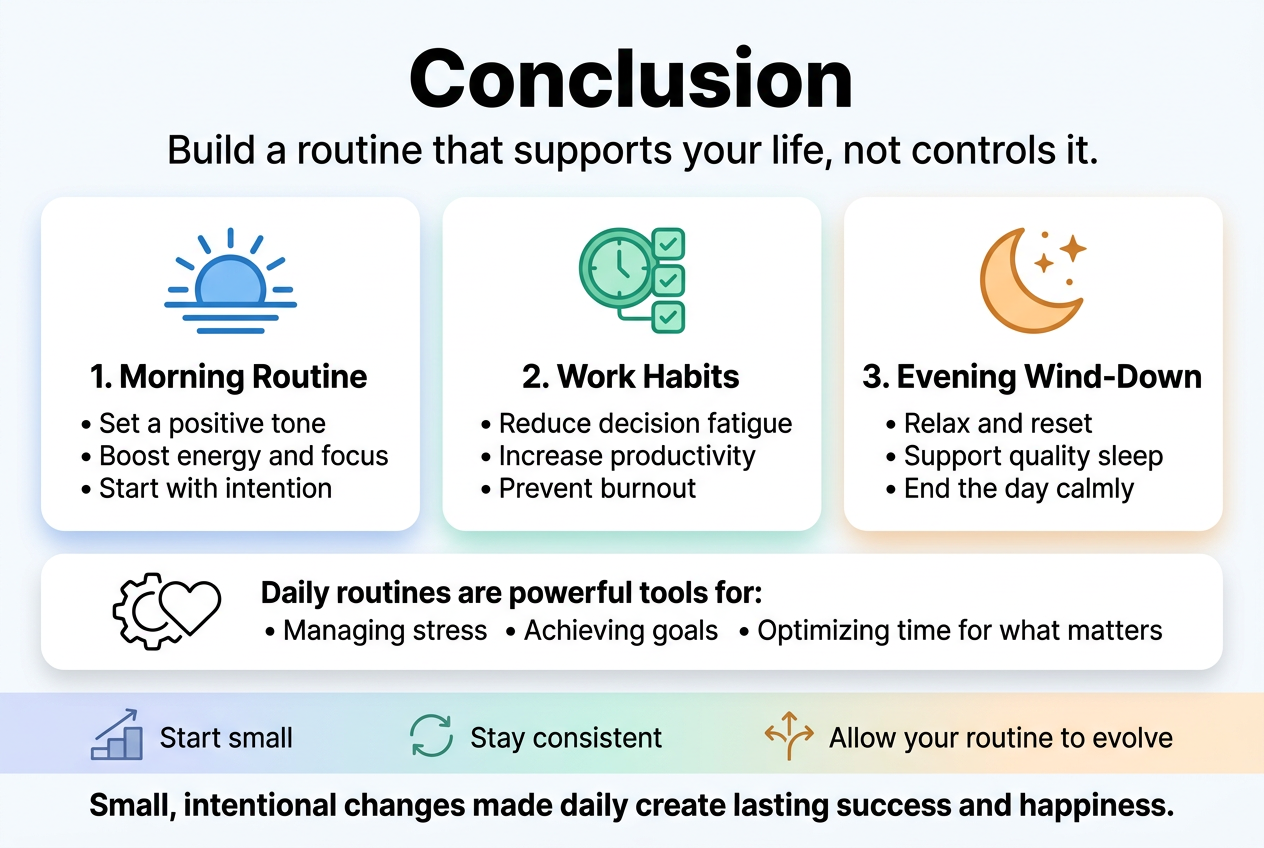
Building the perfect daily routine isn’t about creating a rigid schedule that controls every minute of your day. It’s about establishing meaningful habits that reduce decision fatigue, increase productivity, and improve your overall well-being. From crafting an energizing morning routine that sets a positive tone, to implementing productive work habits that prevent burnout, to creating an evening wind-down ritual that supports quality sleep—each element works together to create structure and stability in your life.
Remember that daily routines are more than just schedules—they’re powerful tools for managing stress, achieving your goals, and optimizing your time for what truly matters. Whether you’re looking to boost productivity, prioritize relaxation, or focus on health and fitness, the key is building a routine that aligns with your unique lifestyle and energy patterns. Start small, stay consistent, and allow your routine to evolve as your needs change. Small, intentional changes made daily can create a lasting impact on your success and happiness.
RELATED POSTS
View all


Self-Confidence and Positive Thinking: 5 Blueprints for Success
September 10, 2025 | by support@rabgcontent.com

Best whey protein for muscle gain in India
September 22, 2025 | by support@rabgcontent.com

What Is the Best Workout Plan? A Real Guide for Young Men Who Want to See Results
June 17, 2026 | by support@rabgcontent.com