
The Secret Gold Strategy Billionaires Use Daily (And How You Can Too!)
June 7, 2026 | by support@rabgcontent.com

The Secret Gold Strategy Billionaires Use Daily
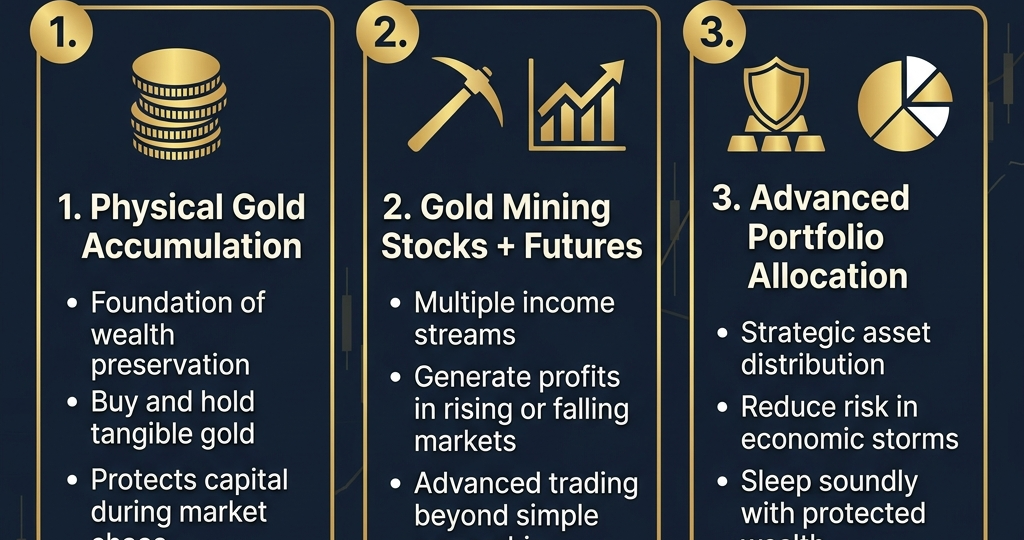
Ever wonder how the world’s wealthiest investors protect their fortunes during market chaos? While most people panic-sell stocks or scramble for bonds, billionaires quietly turn to gold – and they’re using specific strategies that go far beyond buying a few coins.
This guide is for serious investors ready to learn how ultra-wealthy individuals build their billionaire gold strategy into unstoppable wealth machines. You’ll discover the exact methods they use for gold wealth preservation, from physical gold accumulation to advanced trading techniques that generate income while protecting capital.
We’ll break down three game-changing approaches that separate amateur gold buyers from billionaire-level investors. First, you’ll learn the physical gold investment methods that form the foundation of every billionaire’s precious metals portfolio. Then, we’ll explore how gold mining stocks and gold futures trading create multiple income streams that keep generating profits whether markets rise or fall. Finally, you’ll discover the advanced gold portfolio allocation secrets that let billionaires sleep soundly knowing their wealth is protected against any economic storm.
Ready to think about gold the way billionaires do? Let’s dive into the strategies they use every single day.
Why Gold Remains the Ultimate Wealth Preservation Tool
Protection Against Currency Devaluation and Inflation
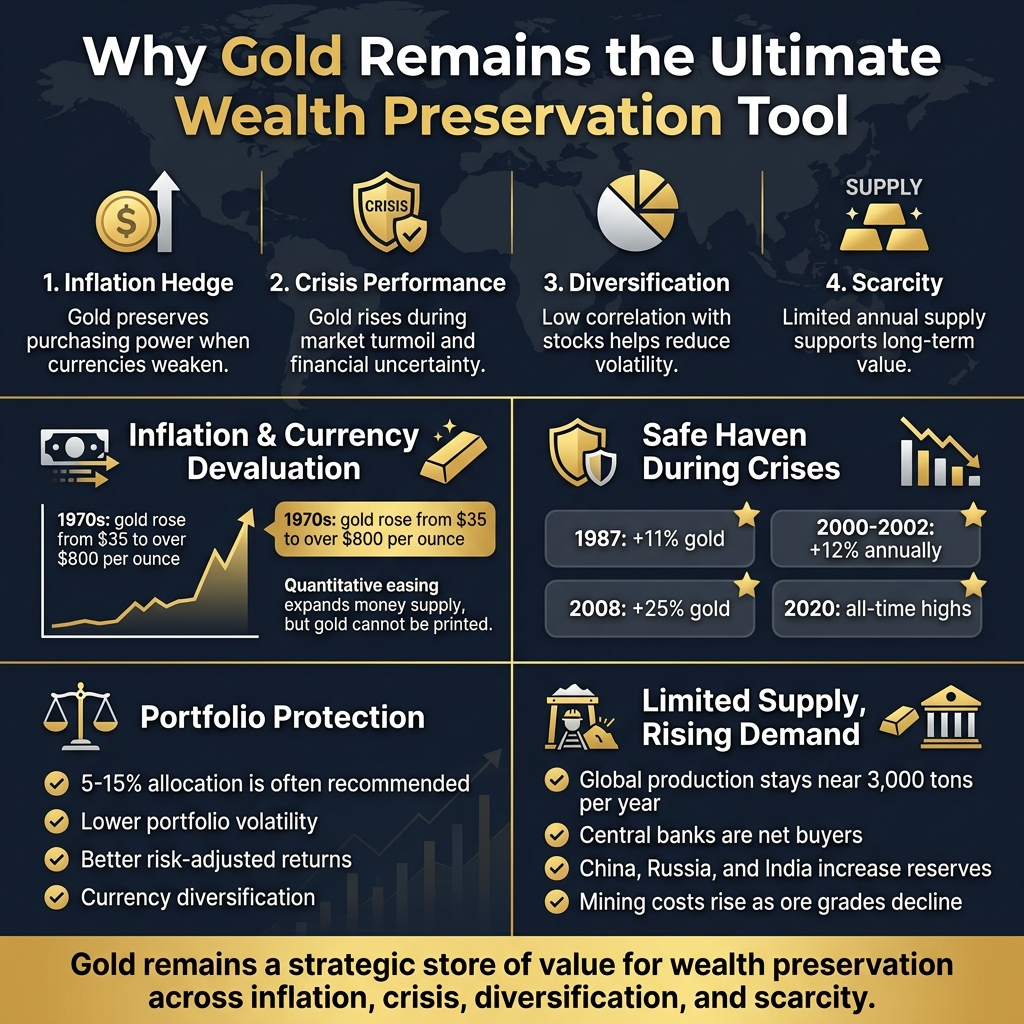
Gold has served as humanity’s most reliable hedge against currency debasement for thousands of years. When central banks print money to stimulate economies or fund government spending, the purchasing power of paper currencies inevitably declines. This billionaire gold strategy recognizes that gold maintains its intrinsic value regardless of monetary policy decisions.
During periods of high inflation, gold typically outperforms traditional assets. The 1970s inflation crisis saw gold prices surge from $35 to over $800 per ounce, delivering extraordinary returns while stocks and bonds struggled. Smart investors who understood gold wealth preservation principles protected and grew their wealth while others watched their purchasing power erode.
Modern quantitative easing policies have created unprecedented money supply expansion. Billionaires recognize this pattern and allocate significant portions of their portfolios to precious metals investing. Unlike fiat currencies, gold cannot be printed or created digitally, making it immune to government manipulation and central bank policies.
Historical Performance During Economic Crises
Economic turmoil consistently drives investors toward gold’s safe-haven properties. The 2008 financial crisis demonstrated gold’s resilience when it gained over 25% while stock markets collapsed globally. Similarly, during the COVID-19 pandemic, gold reached all-time highs as uncertainty gripped financial markets.
Historical data reveals gold’s remarkable consistency during:
- Black Monday (1987): Gold gained 11% while stocks crashed
- Dot-com bubble (2000-2002): Gold climbed 12% annually during the tech wreck
- European debt crisis (2010-2012): Gold surged to record highs above $1,900
Billionaires understand these patterns and position themselves accordingly. They don’t wait for crises to begin accumulating gold; they maintain strategic allocations that activate during market stress.
Portfolio Diversification Benefits
Gold’s negative correlation with traditional assets makes it essential for sophisticated portfolio construction. When stocks decline, gold often rises, creating natural portfolio balance. This relationship becomes more pronounced during extreme market conditions, exactly when diversification matters most.
Professional portfolio managers recommend 5-15% gold allocation for optimal risk-adjusted returns. Billionaire investment secrets often reveal much higher allocations, sometimes exceeding 20% during uncertain economic periods. This strategic positioning provides:
- Reduced portfolio volatility
- Enhanced risk-adjusted returns
- Protection during systematic market failures
- Currency diversification benefits
Limited Supply Creates Long-Term Value
Gold’s scarcity fundamentally drives its long-term appreciation. Annual global gold production remains relatively static at approximately 3,000 tons, while demand continues growing from emerging markets, central banks, and institutional investors. This supply-demand imbalance creates powerful upward pressure on prices.
Central banks worldwide have become net gold buyers after decades of selling. Countries like China, Russia, and India aggressively accumulate gold reserves to reduce dollar dependency. When the world’s largest financial institutions prioritize gold accumulation methods, private investors should pay attention.
Mining companies face increasing challenges extracting gold economically. Ore grades continue declining while extraction costs rise, limiting future supply growth. Easy-to-access gold deposits have been largely exhausted, forcing miners into more expensive and complex operations. These fundamental constraints ensure gold’s long-term value proposition remains intact, explaining why billionaires consistently maintain significant precious metals positions in their wealth preservation strategies.
The Physical Gold Accumulation Method
Strategic Dollar-Cost Averaging Into Precious Metals
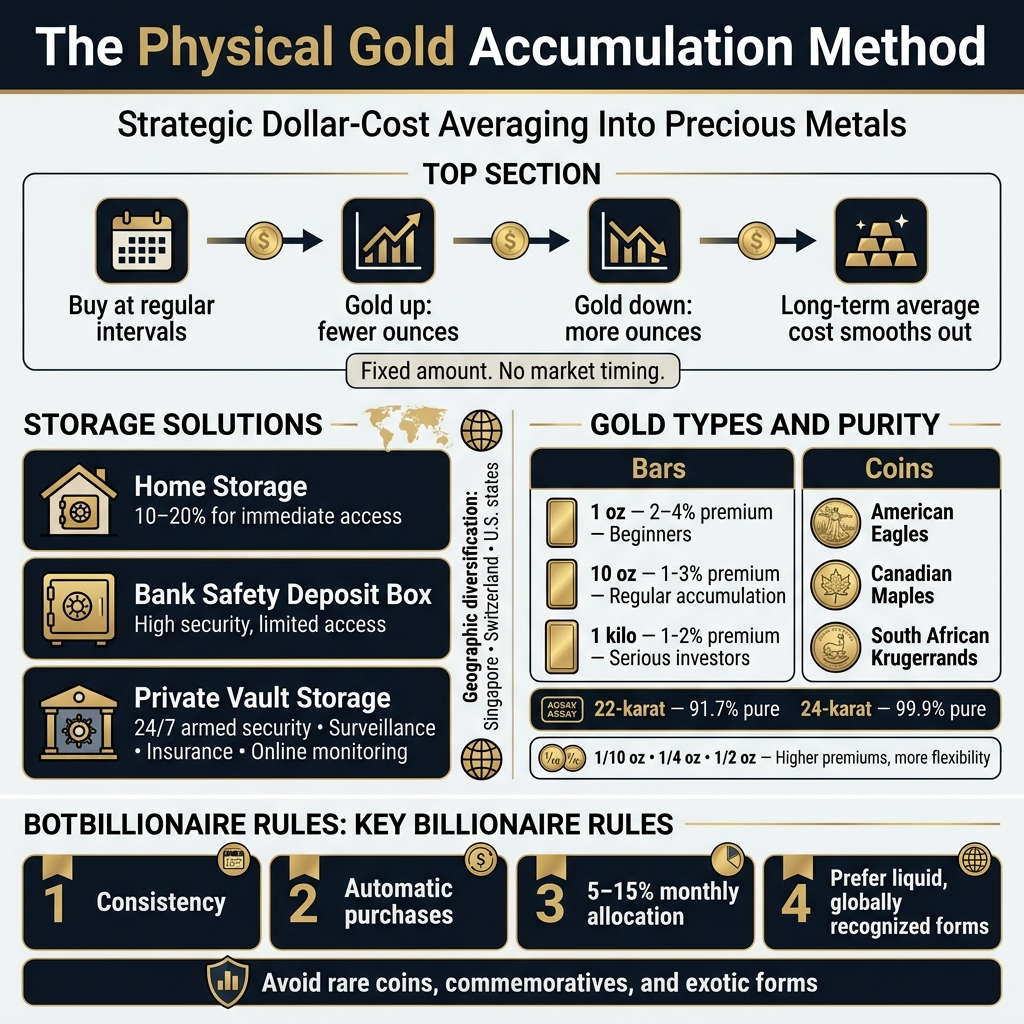
Smart investors know that timing the gold market perfectly is nearly impossible. That’s where the billionaire gold strategy of systematic accumulation comes into play. Dollar-cost averaging into physical gold means investing a fixed amount at regular intervals, regardless of current market prices.
The beauty of this approach lies in its simplicity and effectiveness. When gold prices are high, your fixed investment buys fewer ounces. When prices dip, you acquire more metal for the same dollar amount. Over time, this strategy smooths out price volatility and typically results in a lower average cost per ounce than attempting to time market peaks and valleys.
Wealthy investors often dedicate 5-15% of their monthly investment allocation specifically to precious metals accumulation. They set up automatic purchases through reputable dealers, treating gold like any other essential asset class. This disciplined approach removes emotion from the equation and builds substantial positions over time.
The key is consistency. Whether the market is experiencing turbulence or stability, the accumulation continues. Many billionaires start with smaller amounts – perhaps $500-1000 monthly – and gradually increase their allocation as their wealth grows. This method has proven particularly effective during periods of economic uncertainty when gold’s wealth preservation qualities shine brightest.
Optimal Storage Solutions for Maximum Security
Physical gold ownership means taking responsibility for secure storage. Billionaires typically employ a multi-layered storage strategy that balances accessibility, security, and geographic diversification.
Home storage works for smaller quantities, but requires a high-quality safe that’s fireproof, waterproof, and securely anchored. Many wealthy investors keep 10-20% of their gold holdings at home for immediate access during emergencies. The rest gets distributed across more secure locations.
Bank safety deposit boxes offer excellent security but come with limitations. Banks control access hours, and during banking holidays or crises, your gold might be temporarily inaccessible. Additionally, safety deposit box contents aren’t insured by the FDIC, requiring separate coverage.
Private vault storage represents the gold standard for serious investors. Companies like Brink’s, Delaware Depository, and International Depository Services offer segregated storage where your specific bars and coins remain separate from others. These facilities provide:
- 24/7 armed security
- Advanced surveillance systems
- Insurance coverage
- Online account monitoring
- Global access points
Geographic diversification adds another protection layer. Savvy investors store gold across multiple countries, protecting against single-jurisdiction risks. Singapore, Switzerland, and certain U.S. states offer particularly attractive storage environments with strong property rights and political stability.
Understanding Gold Purity and Form Selection
Not all gold is created equal, and billionaires understand the critical differences between various forms and purities. The choice depends on investment goals, storage capacity, and liquidity needs.
Gold Bars vs. Coins
Gold bars offer the lowest premiums over spot price, making them ideal for large accumulations. Popular options include:
| Bar Size | Typical Premium | Best For |
|---|---|---|
| 1 oz | 2-4% | Beginners |
| 10 oz | 1-3% | Regular accumulation |
| 1 kilo | 1-2% | Serious investors |
Gold coins command higher premiums but offer superior liquidity and recognition. American Eagles, Canadian Maples, and South African Krugerrands are globally recognized and easily traded.
Purity Standards
Investment-grade gold typically ranges from 22-karat (91.7% pure) to 24-karat (99.9% pure). Higher purity means lower premiums and easier resale. Most billionaires focus on .999 fine gold for maximum value retention.
Fractional vs. Full Ounces
Fractional ounces (1/10, 1/4, 1/2 oz) carry higher premiums but provide flexibility for partial liquidation. Wealthy investors often maintain 20-30% of their holdings in fractional sizes for tactical selling opportunities.
The billionaire approach prioritizes liquidity and global recognition over novelty. They avoid rare coins, commemoratives, or exotic forms that might complicate future sales. The goal remains wealth preservation through the most universally accepted forms of precious metals.
Gold Mining Stock Investment Strategies
Identifying Undervalued Mining Companies
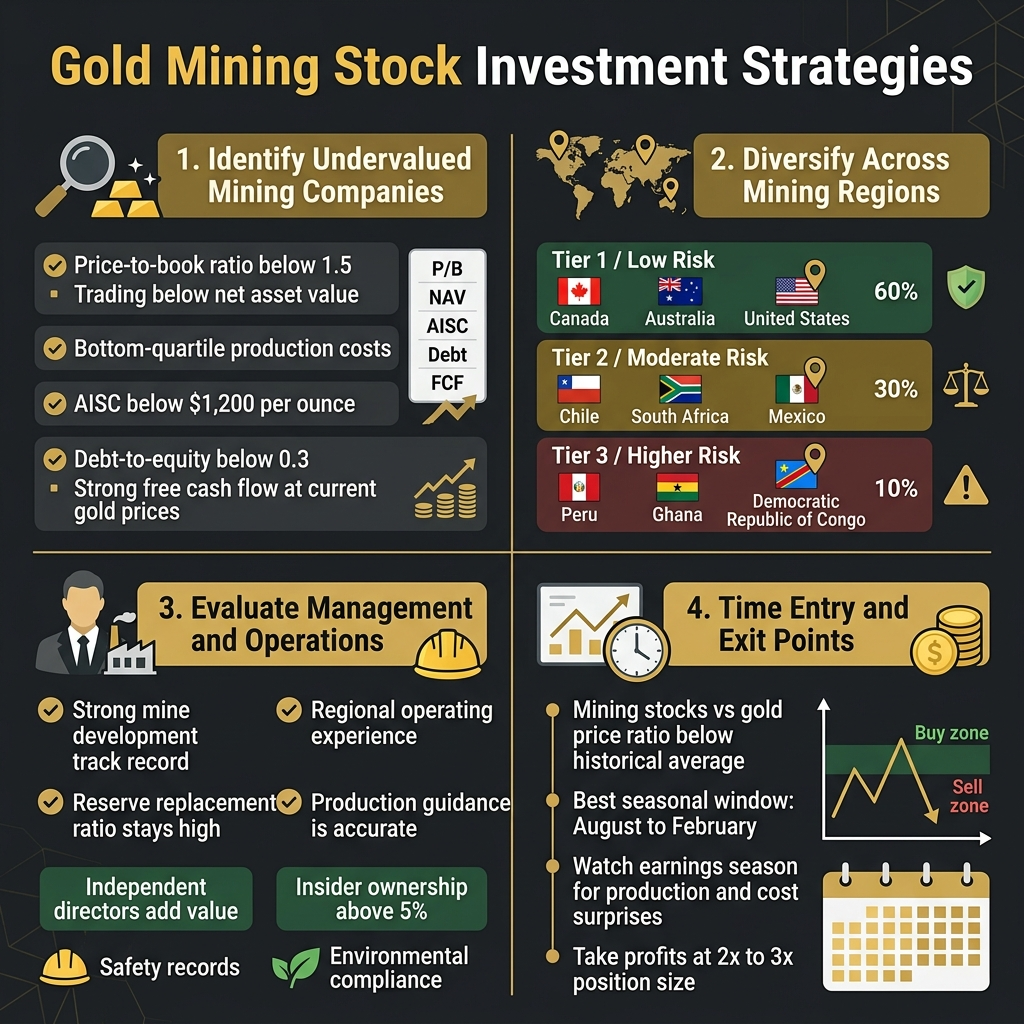
Smart investors who follow the billionaire gold strategy know that finding undervalued mining companies requires deep research beyond surface-level metrics. Start by examining price-to-book ratios below 1.5 and compare them to industry averages. Companies trading below their net asset value often present excellent opportunities, especially when they own proven reserves in stable jurisdictions.
Look for mining companies with production costs in the bottom quartile of their peer group. The all-in sustaining cost (AISC) per ounce reveals operational efficiency better than basic production figures. Companies maintaining AISC below $1,200 per ounce typically weather market downturns better and generate higher margins during gold price rallies.
Debt-to-equity ratios tell another crucial story. Mining companies with ratios below 0.3 usually have financial flexibility to expand operations or weather commodity price volatility. Free cash flow generation at current gold prices indicates whether a company can fund growth without diluting shareholders through equity raises.
Geographic Diversification Across Mining Regions
Geographic diversification protects against country-specific risks that can devastate single-region portfolios. Spread investments across multiple jurisdictions with different risk profiles and regulatory environments.
Tier 1 Jurisdictions (Low Risk):
- Canada (stable regulations, mining-friendly policies)
- Australia (strong rule of law, developed infrastructure)
- United States (political stability, established legal framework)
Tier 2 Jurisdictions (Moderate Risk):
- Chile (copper-gold operations, generally stable)
- South Africa (rich deposits, higher operational complexity)
- Mexico (growing mining sector, improving regulations)
Tier 3 Jurisdictions (Higher Risk, Higher Potential Returns):
- Peru (significant gold reserves, political considerations)
- Ghana (West African gold belt, infrastructure challenges)
- Democratic Republic of Congo (massive reserves, political instability)
Allocate 60% of gold mining stocks to Tier 1 jurisdictions, 30% to Tier 2, and 10% to Tier 3 for aggressive growth potential while maintaining portfolio stability.
Evaluating Management Teams and Operational Efficiency
Management quality separates successful gold mining stocks from value traps. Research executive track records, focusing on leaders who have successfully developed mines from exploration through production. Look for management teams with experience in the specific geographic regions where they operate.
Operational efficiency metrics reveal management effectiveness. Compare reserve replacement ratios across companies – successful teams consistently replace mined ounces with new discoveries. Production guidance accuracy over multiple years indicates management credibility and operational control.
Board composition matters significantly. Independent directors with mining engineering, finance, or regional expertise add substantial value. Insider ownership above 5% aligns management interests with shareholders and demonstrates confidence in company prospects.
Employee safety records reflect operational discipline. Companies with superior safety statistics typically run tighter operations overall. Environmental compliance history predicts future regulatory challenges and potential costs.
Timing Entry and Exit Points for Maximum Returns
Gold mining stocks amplify gold price movements, making timing crucial for maximizing returns. Technical analysis combined with fundamental factors creates the most effective entry and exit strategies.
Monitor gold mining stock indices relative to gold prices. When the ratio falls below historical averages, mining stocks become oversold relative to the underlying commodity. This typically occurs during broad market selloffs when investors flee risk assets.
Seasonal patterns offer additional timing advantages. Gold mining stocks often perform best from August through February, coinciding with jewelry demand and investment flows into precious metals. Plan major position adjustments around these cyclical trends.
Watch for earnings season patterns. Companies reporting strong production numbers and cost improvements often see sustained price appreciation. Conversely, production disappointments or cost overruns trigger selling pressure that creates entry opportunities in quality companies with temporary setbacks.
Set profit-taking targets at 2-3 times position size when stocks reach extreme valuations relative to historical norms. This disciplined approach captures outsized gains while preserving capital for future opportunities in this cyclical sector.
Gold Futures and Options Trading Techniques
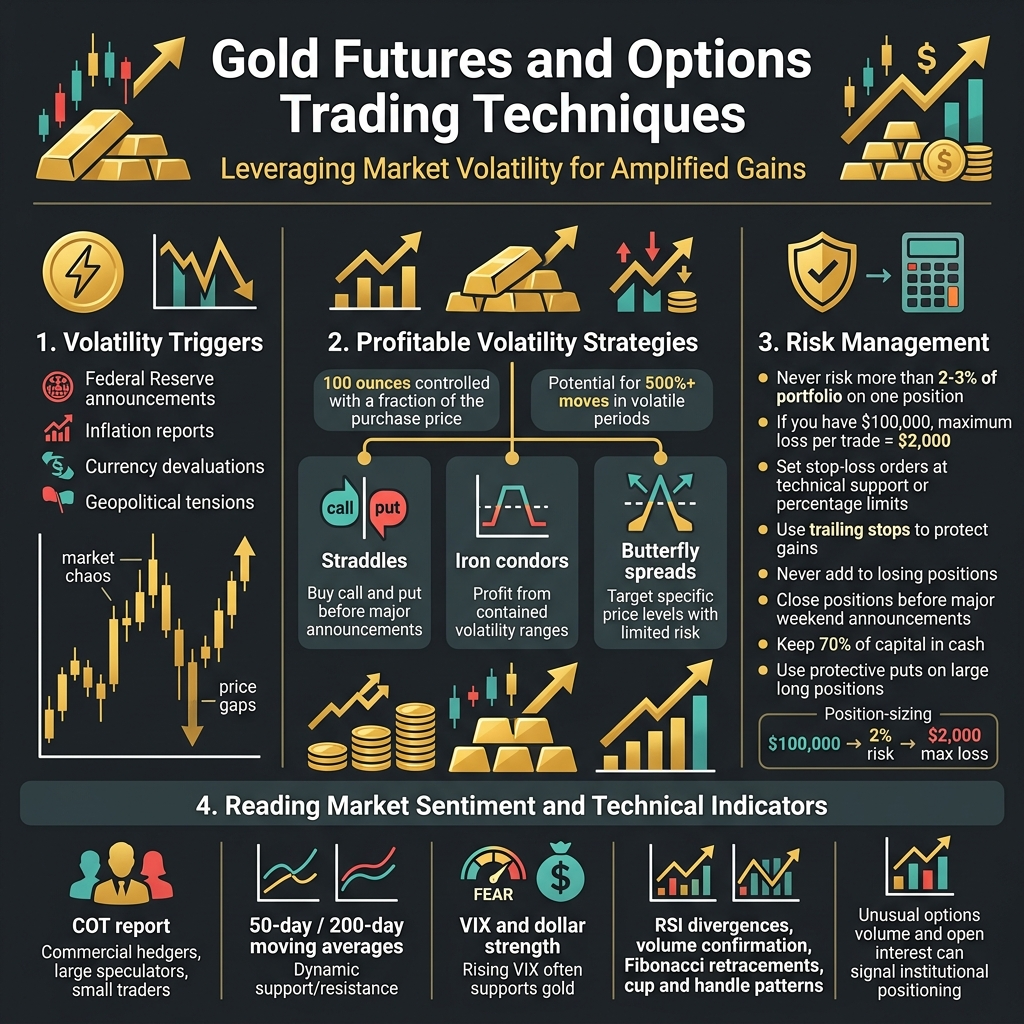
Leveraging Market Volatility for Amplified Gains
Billionaires understand that gold futures and options create explosive profit opportunities during market chaos. When economic uncertainty strikes and traditional assets wobble, gold often experiences dramatic price swings that savvy traders can capitalize on.
Options contracts give you the right to buy or sell gold at predetermined prices, magnifying your exposure without requiring massive capital upfront. A single call option on gold futures can control 100 ounces of gold with just a fraction of the actual purchase price. During volatile periods, these contracts can multiply your investment by 500% or more in days.
The smart money watches for specific volatility triggers: Federal Reserve announcements, inflation reports, currency devaluations, and geopolitical tensions. These events often create immediate price gaps that experienced traders exploit through strategic options positioning.
Profitable volatility strategies include:
- Straddles: Buying both call and put options before major announcements
- Iron condors: Profiting from contained volatility ranges
- Butterfly spreads: Targeting specific price levels with limited risk
Risk Management Through Proper Position Sizing
Professional gold traders never risk more than 2-3% of their portfolio on any single futures or options position. This billionaire gold strategy protects wealth while allowing for aggressive growth opportunities.
Position sizing calculations start with your maximum acceptable loss per trade. If you have $100,000 and limit risk to 2%, you can lose $2,000 maximum on one position. From there, calculate how many contracts or options you can afford based on potential loss scenarios.
Stop-loss orders become critical in gold futures trading due to leverage amplification. Set stops at technical support levels or percentage-based limits before entering positions. Many professionals use trailing stops that move with profitable positions while protecting gains.
Essential risk management rules:
- Never add to losing positions in leveraged trades
- Close positions before major weekend announcements
- Keep 70% of capital in cash for new opportunities
- Use protective puts when holding large long positions
Reading Market Sentiment and Technical Indicators
Gold futures respond predictably to specific technical patterns and sentiment indicators. The Commitment of Traders (COT) report reveals how commercial hedgers, large speculators, and small traders position themselves weekly. When commercial traders increase short positions while speculators go long, reversals often follow.
Technical analysis becomes particularly powerful in gold markets because precious metals follow clear support and resistance levels. The 50-day and 200-day moving averages act as dynamic support/resistance zones that traders watch religiously.
Market sentiment indicators like the VIX (fear index) and dollar strength measurements directly impact gold pricing. Rising VIX typically correlates with gold strength as investors seek safe havens. Weakening dollar conditions often create bullish gold environments that futures traders exploit.
Key technical signals to monitor:
- RSI divergences: When price makes new highs but RSI doesn’t
- Volume confirmation: Heavy volume on breakouts validates moves
- Fibonacci retracements: Gold respects these levels consistently
- Cup and handle patterns: Often precede major upward moves
Gold options volume and open interest provide additional insight into institutional positioning. Unusual activity in specific strike prices often telegraphs where big money expects gold to move.
Creating Multiple Gold-Based Income Streams
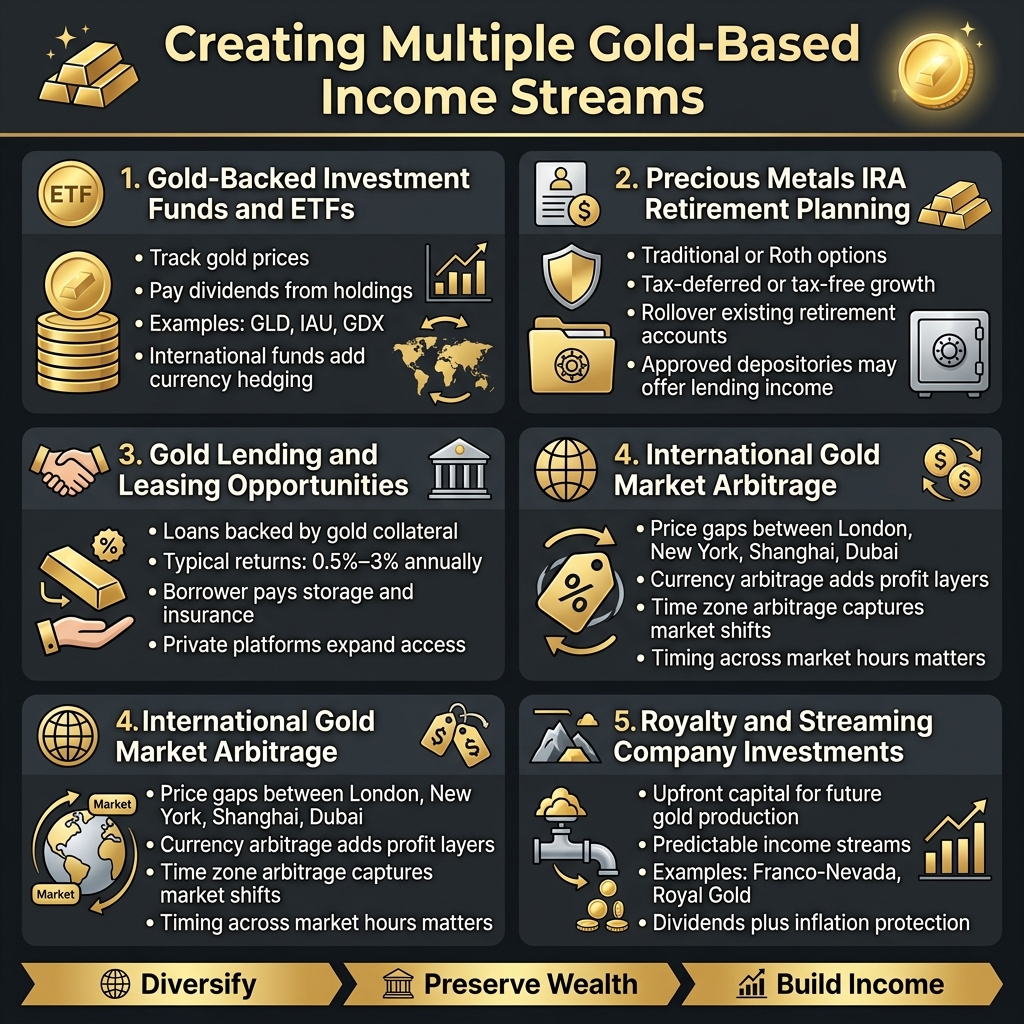
Gold-Backed Investment Funds and ETFs
Gold ETFs represent one of the most accessible ways to generate steady income from precious metals without the hassles of physical storage. These funds track gold prices while paying dividends from their holdings, creating a passive billionaire gold strategy that requires minimal hands-on management.
SPDR Gold Trust (GLD) and iShares Gold Trust (IAU) lead the market, but savvy investors look beyond these mainstream options. Gold mining ETFs like VanEck Vectors Gold Miners ETF (GDX) often provide higher yields through dividend-paying mining companies. The key is diversifying across multiple funds to capture different aspects of the gold market.
International gold ETFs offer currency hedging opportunities and exposure to different regulatory environments. Canadian and Australian gold funds frequently outperform during specific market cycles, providing additional income streams through strategic rotation.
Precious Metals IRA Retirement Planning
Self-directed precious metals IRAs unlock tax-advantaged gold income streams that most investors never consider. These accounts allow direct ownership of physical gold, silver, platinum, and palladium while maintaining tax-deferred or tax-free growth depending on whether you choose traditional or Roth options.
The real wealth-building power comes from understanding contribution limits and rollover strategies. High-income earners can maximize contributions while converting existing retirement accounts into precious metals positions. This creates a hedge against currency devaluation while building long-term gold wealth preservation.
Storage requirements add complexity but also opportunity. Approved depositories often provide additional services like precious metals lending, creating extra income from your retirement holdings. The combination of tax advantages and potential lending income makes this strategy particularly attractive for long-term wealth building.
Gold Lending and Leasing Opportunities
Gold lending operates similarly to traditional securities lending but with precious metals as collateral. Banks, jewelry manufacturers, and mining companies regularly need gold inventory, creating consistent demand for lending services.
Interest rates on gold loans typically range from 0.5% to 3% annually, depending on market conditions and loan duration. While these rates seem modest, they provide steady cash flow from otherwise dormant gold holdings. The borrower pays all storage and insurance costs, eliminating carrying expenses for lenders.
Central bank gold lending programs offer the most stable returns, though minimum requirements often exceed individual investor capabilities. Private lending platforms have emerged to democratize access, allowing smaller investors to participate in institutional-grade opportunities.
International Gold Market Arbitrage
Price discrepancies between global gold markets create profitable arbitrage opportunities for sophisticated investors. London, New York, Shanghai, and Dubai markets sometimes show price gaps due to timing differences, currency fluctuations, or regulatory factors.
Currency arbitrage provides additional profit layers when gold prices remain stable but exchange rates shift. Buying gold in weakening currencies and selling in strengthening ones amplifies returns beyond simple price appreciation.
Time zone arbitrage exploits overnight price movements between Asian and Western markets. Professional traders use automated systems to capture these brief opportunities, but individual investors can participate through strategic timing of purchases and sales across different market hours.
Royalty and Streaming Company Investments
Royalty and streaming companies represent the pinnacle of billionaire investment secrets in the precious metals space. These firms provide upfront capital to mining operations in exchange for future gold production at predetermined prices, creating predictable income streams with built-in inflation protection.
Franco-Nevada Corporation and Royal Gold Inc. lead this sector, paying consistent dividends while maintaining lower operational risks than traditional mining companies. Their business model generates cash flow from multiple mines without bearing extraction costs or operational headaches.
Streaming agreements often include escalation clauses that increase payments as gold prices rise, providing natural hedge against inflation. The combination of steady dividends and appreciation potential makes these investments particularly attractive during economic uncertainty when gold wealth preservation becomes paramount.
Advanced Portfolio Allocation and Rebalancing
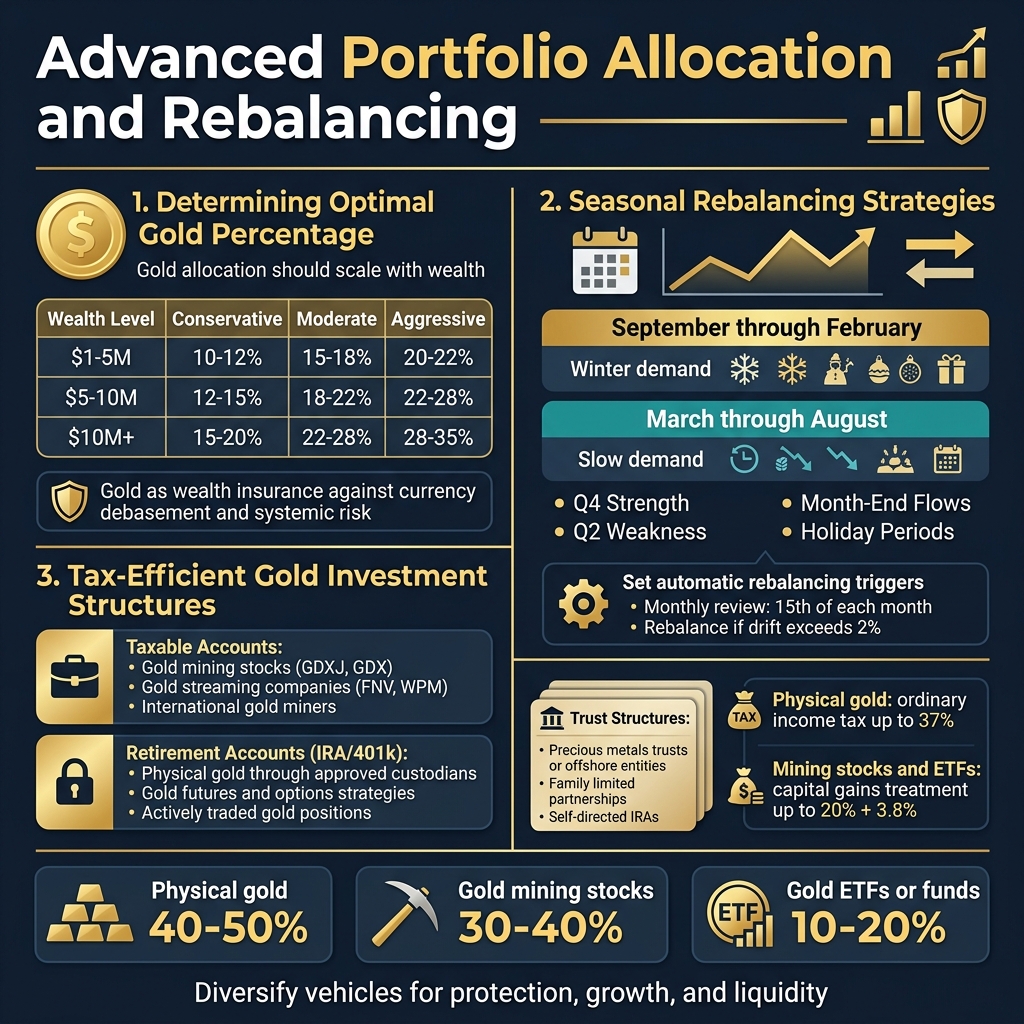
Determining Optimal Gold Percentage for Your Wealth Level
Your gold allocation should scale with your wealth—not decrease. Most financial advisors push the outdated “5-10% rule,” but billionaire gold strategy reveals a different approach. Ultra-high-net-worth individuals typically hold 15-30% of their portfolios in gold-related assets, spread across physical bullion, mining stocks, and precious metals funds.
The sweet spot depends on your risk tolerance and wealth protection goals. Conservative investors with $1-5 million might start with 10-15% allocation, while those with $10+ million often push toward 20-25%. The key insight: as your wealth grows, traditional diversification becomes less important than wealth preservation. Gold serves as your insurance policy against currency debasement and systemic financial risks.
Consider this allocation framework:
| Wealth Level | Conservative | Moderate | Aggressive |
|---|---|---|---|
| $1-5M | 10-12% | 15-18% | 20-22% |
| $5-10M | 12-15% | 18-22% | 22-28% |
| $10M+ | 15-20% | 22-28% | 28-35% |
Remember to split your gold allocation across different vehicles—physical gold (40-50%), gold mining stocks (30-40%), and gold ETFs or funds (10-20%). This approach maximizes both protection and growth potential while maintaining liquidity.
Seasonal Rebalancing Strategies
Smart gold investors don’t rebalance randomly—they follow predictable seasonal patterns that have persisted for decades. Gold prices typically strengthen during specific periods, creating natural rebalancing opportunities that savvy investors exploit.
The strongest seasonal window runs from September through February, driven by Indian wedding season demand, Chinese New Year purchases, and year-end investment flows. During these months, consider trimming gold positions when they exceed your target allocation by 3-5%. Conversely, March through August often presents buying opportunities as jewelry demand slows and investment flows shift toward equities.
Monthly rebalancing works best for most investors. Set calendar reminders for the 15th of each month to review your gold allocation. If it drifts more than 2% above or below your target, execute trades to bring it back in line. This disciplined approach captures profits during gold rallies while adding positions during temporary weakness.
Consider these seasonal timing strategies:
- Q4 Strength: Reduce overweight positions in November-December
- Q2 Weakness: Add to underweight positions in May-June
- Month-End Flows: Watch for volatility spikes around options expiration
- Holiday Periods: Light trading volumes can create better entry/exit prices
The billionaire approach involves setting automatic rebalancing triggers rather than emotional decision-making. When gold hits predetermined percentage thresholds, mechanical buying or selling removes emotion from the equation.
Tax-Efficient Gold Investment Structures
Physical gold faces ordinary income tax rates on gains—potentially 37% for high earners. Smart investors structure their gold investments to minimize this tax burden through strategic account placement and vehicle selection.
Gold mining stocks and ETFs qualify for capital gains treatment, capping your tax rate at 20% plus potential 3.8% net investment income tax. This makes them ideal for taxable accounts. Meanwhile, physical gold works better in tax-deferred retirement accounts where you can trade without immediate tax consequences.
Here’s the optimal structure breakdown:
Taxable Accounts:
- Gold mining stocks (GDXJ, GDX)
- Gold streaming companies (FNV, WPM)
- International gold miners for currency diversification
Retirement Accounts (IRA/401k):
- Physical gold through approved custodians
- Gold futures and options strategies
- Actively traded gold positions
Trust Structures:
Wealthy individuals often establish precious metals trusts or offshore entities to hold physical gold. These structures can provide additional privacy and potential tax advantages, especially for international diversification. Family limited partnerships allow you to gift gold interests to heirs at discounted valuations while maintaining control.
Self-directed IRAs offer another powerful vehicle for physical gold accumulation. You can hold approved coins and bullion while deferring taxes on gains. The key is working with specialized custodians who understand precious metals storage and reporting requirements. This strategy becomes increasingly valuable as your gold portfolio grows beyond $500,000.

The wealthy understand something that most people miss – gold isn’t just a shiny metal, it’s a financial fortress. From accumulating physical gold to mastering mining stocks and futures trading, billionaires use these strategies to protect and grow their wealth across multiple income streams. They know that proper portfolio allocation with gold creates a safety net that survives market crashes, inflation, and economic uncertainty.
Start small but start today. Whether you begin with physical gold coins, explore mining stocks, or dive into futures trading, the key is taking action and building your gold strategy step by step. The billionaires didn’t get wealthy by accident – they followed proven methods that you can learn and apply. Your financial future deserves the same protection strategy that has preserved wealth for thousands of years.
RELATED POSTS
View all


GST Ke Naye Niyam 2025: Learn and Make Big Savings!
September 8, 2025 | by support@rabgcontent.com


“2025 में सोने की कीमत में आया चौंकाने वाला भूचाल”! जानें क्यों हो रहा है ये तूफान और कब मिलेगी राहत
October 11, 2025 | by support@rabgcontent.com