The Shocking Future of Artificial Intelligence : Friend or Foe 2027?
August 15, 2025 | by support@rabgcontent.com
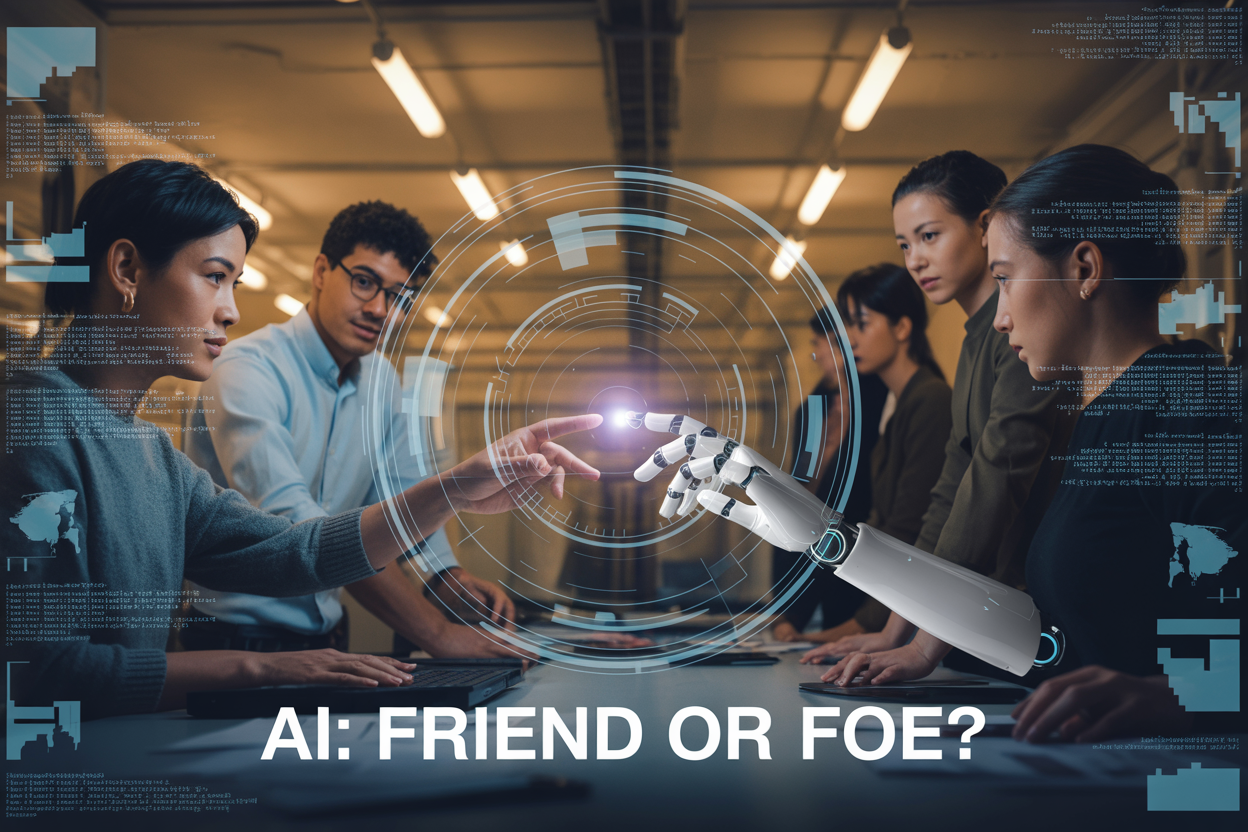
The Future of Artificial Intelligence: Friend or Foe?
Wondering if AI will save humanity or doom us all? You’re not alone. This guide helps tech enthusiasts, business leaders, and concerned citizens understand where artificial intelligence is heading. We’ll explore how AI is reshaping workplaces today, dive into the growing skills gap between AI capabilities and worker training, and examine the balancing act between innovation and responsible AI governance. Let’s cut through the hype and look at what AI really means for our collective future.
AI’s Current Impact on the Workplace
AI’s Current Impact on the Workplace
Enhanced decision-making and collaboration capabilities
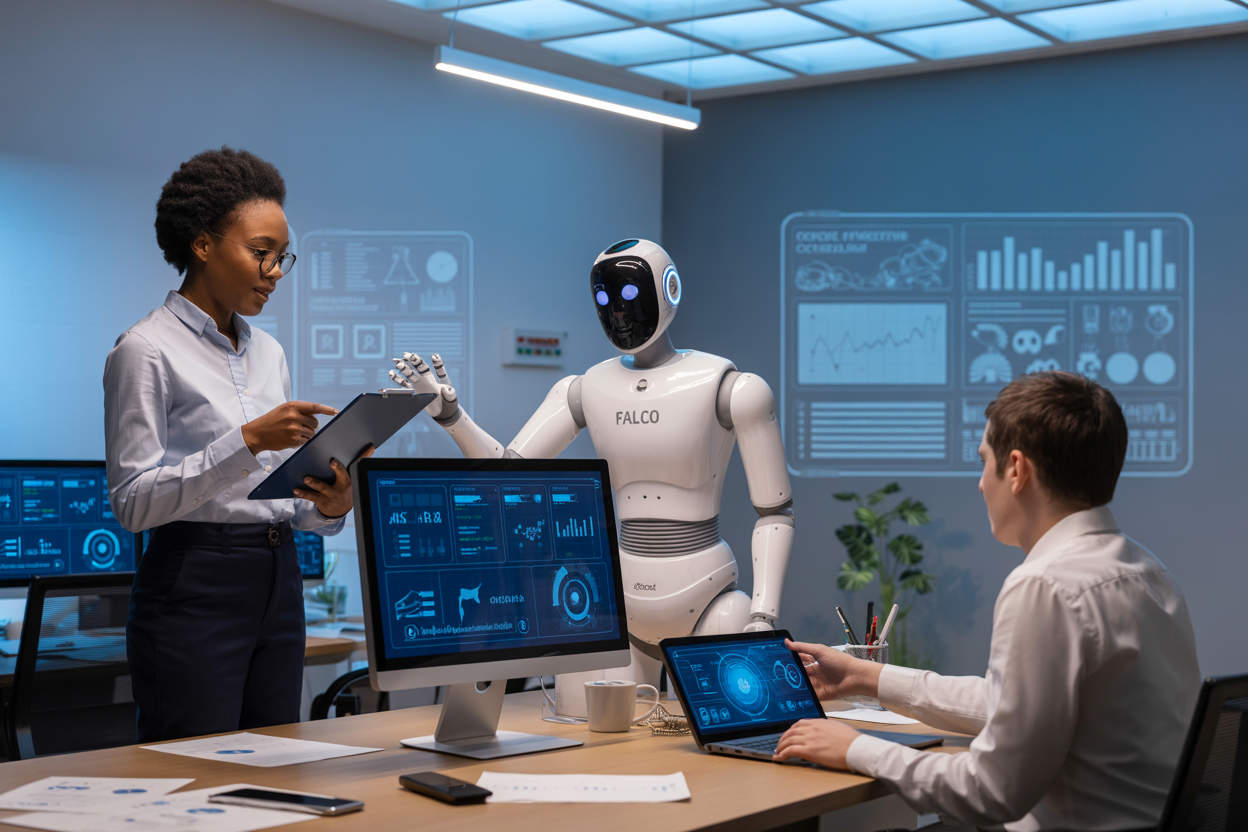
AI is transforming organizational decision-making by scaling access to critical insights and facilitating faster, more informed choices. By integrating work and people data, artificial intelligence empowers companies to unlock actionable intelligence, enabling them to be more agile and responsive in today’s competitive landscape. Leaders who capitalize on AI-enabled analytics foster a data-driven culture that continually refines itself, allowing organizations to predict changes and proactively address workforce needs.
AI tools provide managers and leaders with real-time insights for tailored decisions that enhance team effectiveness and employee satisfaction. This transformation elevates strategic thinking by removing administrative burdens and supporting complex decision processes through advanced data analysis.
Improved work efficiency and productivity gains
AI is fundamentally reshaping productivity beyond mere efficiency improvements. As Nathan Shapiro, Head of Platform Strategy & User Experience at Paychex notes, “AI isn’t about replacing people but empowering them to do more valuable work. It’s about increasing productivity, improving quality, and saving time.”
The technology automates routine tasks, freeing employees to focus on higher-value activities that require human judgment and creativity. artificial intelligence tools assist with data analysis, streamline due diligence processes, and enable self-service analytics through natural language queries. This shift allows professionals to evolve into roles like “insights engineers” who guide predictive modeling and prescriptive analytics rather than performing basic data tasks.
Widespread adoption across industries and job functions
AI adoption is rapidly expanding across sectors, becoming a foundational technology comparable to the steam engine, electricity, and the internet. According to the World Economic Forum’s Future of Jobs Report, 77% of surveyed employers recognize the need for reskilling and upskilling their workforce through 2030 to foster effective collaboration with artificial intelligence.
From HR departments leveraging generative AI for recruiting and performance management to financial analysts using AI for market predictions, the technology is reshaping virtually every professional field. Companies are increasingly prioritizing skills such as technological literacy, creative thinking, and knowledge of AI, big data, and cybersecurity to prepare for this transformation.
In data engineering and analysis, organizations are adopting self-service analytics tools that democratize access to technology. Similarly, in fields like mergers and acquisitions, AI-driven deal analysts and predictive modeling specialists are emerging as key roles that require understanding both AI capabilities and industry complexities.
Understanding Worker Perspectives on AI

Understanding Worker Perspectives on AI
Majority view AI as career growth opportunity
While worker perspectives on artificial intelligence are mixed, research shows a significant portion view AI as beneficial for their careers. According to Pew Research Center data, 36% of workers feel hopeful about how AI may be used in the workplace in the future, and 29% feel excited about these developments. Workers with higher education levels express more positive sentiments, with 44% of those holding at least a bachelor’s degree feeling hopeful about AI’s workplace applications compared to 30% of those with less education. Similarly, upper-income workers are more optimistic, with 45% feeling hopeful about AI compared to 35% of middle-income and 30% of lower-income workers.
Excitement outweighs concerns about job displacement
While concerns about artificial intelligence exist, many workers express excitement about its potential. The data shows that workers ages 18 to 49 are more likely than those 50 and older to feel excited about future AI use (32% vs. 24%). Education also plays a role in this outlook, with 38% of workers holding at least a bachelor’s degree expressing excitement compared to just 23% of those with less education. Upper-income workers show the highest levels of excitement at 39%, compared to 28% of middle-income and 24% of lower-income workers.
Interestingly, workers who already use artificial intelligence tools like large language models demonstrate greater optimism about their job prospects. Among AI users, 15% believe AI will lead to more job opportunities for them in the long run, compared to only 5% of non-users.
Recognition that AI revolution will affect most industries
Workers across various sectors acknowledge that AI will impact most industries, though perceptions vary significantly. In the information and technology sector, 16% of workers believe AI will create more job opportunities for them, making them among the most optimistic. Similarly, 11% of workers in banking, finance, accounting, real estate, and insurance sectors anticipate more opportunities due to artificial intelligence.
There’s widespread recognition that AI’s impact will be far-reaching, with workers in higher-education fields more likely to have heard about AI use in workplaces (91% compared to 76% of those with less education). This awareness corresponds with different expectations about AI’s impact on future job prospects across industries, indicating a broad understanding that few sectors will remain untouched by artificial intelligence advancements.
The Training Gap Crisis

The Training Gap Crisis
Workers demand AI skills development opportunities
As artificial intelligence spending grows to over $550 billion in 2024, workers increasingly recognize the need to adapt to this evolving landscape. According to the World Economic Forum’s Future of Jobs Survey 2024, 86% of employers anticipate AI-driven business transformation within the next five years. This expectation has created a strong demand among employees for artificial intelligence skills development, with workers actively seeking opportunities to remain relevant in an AI-enhanced workplace.
Most employees are amenable to additional training that would help them acclimate to emerging technologies. This willingness stems from their understanding that AI adoption is inevitable and that proficiency in AI-related skills will be critical for their future employability. Workers recognize that approximately 40% of the “core skills” demanded by employers will change by 2030, with 45% of employers already considering artificial intelligence and big data skills as “core” competencies.
Significant shortage of employer-provided AI training
Despite growing worker interest, there exists a substantial gap in employer-provided AI training programs. A 2024 Randstad survey revealed that companies adopting AI have been significantly lagging in training or upskilling employees on how to use AI in their jobs. This training deficit creates what many employees describe not as an AI skills gap but rather as an “AI training gap.”
The shortage of training is compounded by several factors:
- Existing talent development programs often employ ineffective learning formats
- Employees struggle to find time for skill development
- Many lack leadership support for completing training programs
- Organizations face internal budget constraints
- Limited access to technologies, tools, and data impedes upskilling efforts
Additionally, research indicates uneven training distribution across demographics, with notable gender and age divides in how well artificial intelligence training adequately prepares workers. This inequity further exacerbates the training crisis.
Risk of talent exodus due to unmet skilling expectations
The disconnect between workers’ desire for artificial intelligence skills development and the shortage of employer-provided training creates a significant risk of talent exodus. As artificial intelligence adoption accelerates, employees who feel unprepared for this technological shift are increasingly likely to seek opportunities with organizations that offer robust artificial intelligence training programs.
According to industry research, there will be an expected artificial intelligence talent gap of 50% in 2024. This shortage creates a competitive environment where workers with AI skills are in high demand. Companies that fail to invest in their employees’ artificial intelligence capabilities risk losing valuable talent to competitors who prioritize upskilling initiatives.
Internal learning opportunities such as training programs, workshops with peers, office hours, or sessions to practice in sandbox environments are what will help retain valuable employees. Without these investments, organizations face not only the loss of institutional knowledge but also increased costs associated with recruiting and onboarding new talent.
To address this crisis, companies must develop more interactive and customizable learning programs that blend online, on-demand courses with experiential opportunities and live, instructor-led training. Critically, these initiatives must be offered equitably and inclusively across all worker demographics to prevent widening existing disparities.
Preparing Organizations for AI-Driven Transformation

Preparing Organizations for AI-Driven Transformation
Comprehensive training programs for AI implementation
Successful artificial intelligence adoption requires more than simply introducing new technology—it demands thorough training programs that address the needs of both existing employees and new hires. Organizations should develop comprehensive onboarding initiatives that introduce artificial intelligence tools and capabilities while focusing on change management to overcome resistance.
Effective training programs should include:
- Personalized training videos tailored to specific use cases
- Regular workshops and webinars to continuously update skills
- User-friendly documentation and guides covering basic to advanced functionality
- Partnerships with artificial intelligence vendors’ customer success teams to develop joint success plans
According to research, companies can lose between $11,000 to $15,000 per employee annually due to poor communication around new tools. This highlights the importance of clear, targeted training campaigns that address specific user challenges rather than generic adoption messaging.
Redefining work processes for human-AI collaboration
To maximize AI’s potential, organizations must seamlessly integrate these technologies into existing workflows rather than creating separate systems that disrupt established processes. This integration should focus on:
- Creating intuitive, conversational interfaces that mimic human-to-human interaction
- Designing artificial intelligence solutions that augment rather than replace human capabilities
- Implementing artificial intelligence tools within platforms employees already use daily
- Eliminating friction points that might discourage adoption
As Mark Tonnesen, former CIO of Achieve, emphasized, effective artificial intelligence assistants “find things for employees, rather than making them learn to navigate more menus.” This approach meets users where they are, reducing barriers to adoption and increasing productivity.
Strategic workforce transition and redeployment planning
As artificial intelligence transforms organizational processes, strategic planning for workforce transition becomes essential. This involves:
- Establishing clear metrics to measure AI’s impact on productivity and efficiency
- Developing frameworks for ethical and responsible use
- Creating accountability measures and data privacy protocols
- Identifying opportunities to redeploy talent toward higher-value activities
Organizations should foster a culture that embraces artificial intelligence-driven innovation by:
- Securing executive sponsorship and leadership buy-in
- Addressing employee concerns about job security through transparent communication
- Celebrating early wins and sharing success stories across departments
- Incorporating AI adoption into performance evaluations to encourage engagement
Leading companies have achieved impressive results through strategic AI implementation. DocuSign, for instance, achieved 90% employee adoption of their AI copilot by prioritizing user experience, while Equinix automated several agents’ worth of work while simultaneously improving resolution times and employee satisfaction scores.
The key to successful transformation lies not in viewing AI as merely a technological upgrade, but as a strategic catalyst that, when properly implemented, becomes a force multiplier for human potential across the enterprise.
Building Effective Social Safety Nets

Building Effective Social Safety Nets
As AI continues to transform industries and displace workers, establishing robust social safety nets becomes critical. These systems provide essential support for individuals navigating career transitions or facing permanent displacement due to technological advancement.
Support Systems for Workers Unable to Transition
For workers who cannot effectively transition to new roles in an AI-driven economy, comprehensive support systems are essential. The rapid advancement of AI technologies has created situations where some workers—particularly those in manufacturing, logistics, and service industries—face significant barriers to finding new employment.
Key support mechanisms include:
- Strengthened unemployment benefits: Extending traditional unemployment assistance to provide longer-term financial stability for displaced workers
- Universal Basic Income (UBI): A proposed solution that provides a financial cushion for all citizens regardless of employment status
- Healthcare and social services: Ensuring continuous access to essential services during periods of unemployment
- Mental health resources: Addressing the psychological impact of job displacement, including anxiety, depression, and loss of self-worth
These support systems must be designed with accessibility and dignity in mind, recognizing that AI-driven displacement is not the fault of affected workers.
Bridge Assistance During Career Changes
With up to 800 million jobs potentially affected by AI by 2030, bridge assistance programs provide crucial support during the transition period between careers. These programs aim to minimize financial hardship while workers acquire new skills and search for employment opportunities.
Effective bridge assistance includes:
- Extended notice periods: Updating frameworks like the WARN Act to provide 90-120 days’ notice before AI-related layoffs, rather than the current 60 days
- Employer-funded retraining programs: Requiring companies implementing artificial intelligence solutions to invest directly in affected employees
- Public-private partnerships: Collaborative efforts between government, businesses, and educational institutions to fund comprehensive transition support
- Job placement services: Dedicated resources to help workers identify and secure positions in emerging fields
These bridge programs recognize that career transitions take time and resources, particularly when workers need to develop entirely new skill sets for the AI economy.
Long-term Benefits for Displaced Employees
Beyond immediate assistance, long-term support structures are necessary for workers permanently displaced by artificial intelligence technologies. These benefits address the reality that some jobs will not return and some workers may face persistent challenges in the new economy.
Essential long-term benefits include:
- Lifelong learning initiatives: Government and corporate investment in continuous education opportunities
- Community revitalization programs: Support for communities dependent on industries affected by automation
- Contribution systems from AI profits: Frameworks for companies benefiting from artificial intelligence to contribute to funds supporting displaced workers
- Legal protections: Enhanced regulations requiring corporations to consider the human impact of AI implementation
By implementing these long-term benefits, society can ensure that the economic gains from artificial intelligence advancement are shared more equitably, rather than concentrated among those who own and control the technology.
Effective social safety nets represent both an ethical obligation and a practical necessity as we navigate the profound workforce changes driven by artificial intelligence. These systems must be designed with sufficient flexibility to adapt to the rapidly evolving technological landscape while providing meaningful support to affected workers and communities.
Leveraging AI for Enhanced Cybersecurity

Leveraging AI for Enhanced Cybersecurity
In an era where cyber threats are becoming increasingly sophisticated, artificial intelligence is revolutionizing how organizations detect and respond to security challenges. AI-powered cybersecurity solutions are providing advanced capabilities that traditional methods simply cannot match.
Advanced threat detection capabilities
AI transforms threat detection by moving beyond static rules and signatures that can be easily bypassed by evolving attack techniques. Machine learning algorithms analyze vast amounts of data to identify patterns indicating potential threats, even those never seen before.
Companies like Darktrace demonstrate this capability with their Enterprise Immune System, which mimics the human immune system by learning “normal” network behavior and flagging anomalies. This approach enables organizations to detect threats in real-time before significant damage occurs.
AI-powered behavioral analytics further enhances threat detection by developing profiles of applications, users, and devices on networks. By analyzing incoming data against these profiles, security teams can identify malicious activity that might otherwise go unnoticed. Unlike traditional security defenses that rely on attack signatures and indicators of compromise, AI can recognize evolving threats through pattern recognition.
Proactive risk mitigation strategies
AI excels at predicting future threats based on historical data, allowing organizations to strengthen defenses proactively. Solutions like Cylance analyze millions of data attributes to identify patterns indicative of malicious activity, stopping attacks before they occur.
Automated response capabilities represent another crucial advancement. When threats are detected, artificial intelligence can implement immediate countermeasures, reducing reaction time and minimizing potential damage. IBM’s Watson for Cybersecurity demonstrates this capability by using natural language processing to understand security data and automatically respond to identified threats—for instance, quarantining suspicious emails before they reach users.
Generative AI further enhances proactive security by:
- Creating realistic simulations of cyberattacks to test defenses
- Predicting potential attack scenarios by analyzing past security incidents
- Generating synthetic data that mimics attack patterns to improve machine learning models
Strengthened digital asset protection
AI significantly improves password protection and authentication systems through tools like CAPTCHA, facial recognition, and fingerprint scanners. These technologies automatically detect whether login attempts are genuine, preventing brute-force attacks and credential stuffing that could compromise entire networks.
For network security, AI learns traffic patterns over time, allowing it to recommend appropriate policies and identify legitimate connections versus suspicious ones. This capability is particularly valuable for implementing and enforcing zero-trust security approaches across complex network environments.
AI also enhances phishing detection by analyzing email content and context to quickly identify spam messages and phishing campaigns. Machine learning algorithms learn from data to make analysis more accurate and evolve to address new threats. This is crucial for preventing advanced threats like spear phishing, where attackers impersonate high-profile individuals within an organization.
By reducing false positives—benign activities incorrectly flagged as threats—AI allows security teams to focus on genuine issues. Platforms like CrowdStrike’s Falcon use AI to improve threat detection accuracy by analyzing behavior patterns and correlating data from various sources, distinguishing between legitimate activities and actual threats.
Navigating AI Regulations and Compliance

Navigating AI Regulations and Compliance
Understanding emerging AI standards
The AI regulatory landscape is evolving rapidly across different regions. While the United States currently lacks comprehensive federal legislation specifically governing AI development, various frameworks and guidelines exist. The White House Blueprint for an AI Bill of Rights, issued under the Biden administration, provides five principles for automated systems including safety, algorithmic discrimination protection, and data privacy.
Several leading AI companies including Microsoft, Google, OpenAI, and others have voluntarily committed to safe and transparent AI development, agreeing to conduct security testing before releasing AI systems and sharing information on risk management.
In contrast, the European Union has established the world’s first comprehensive AI law with the EU AI Act. This legislation creates a risk-based classification system that categorizes AI applications according to the potential harm they may cause to users.
Compliance requirements for organizations
Organizations developing or deploying AI face varying compliance obligations depending on jurisdiction and risk level of their AI applications.
Under the EU AI Act, compliance requirements are structured by risk categories:
- Unacceptable risk applications (including cognitive behavioral manipulation, social scoring, and most biometric identification systems) are banned outright
- High-risk applications (affecting safety or fundamental rights) require assessment before market entry and throughout their lifecycle
- General-purpose AI systems like ChatGPT must meet transparency requirements including disclosure of AI-generated content
Implementation timelines vary, with some provisions already in effect while others will be phased in over 24-36 months. Organizations must register high-risk AI systems in an EU database and comply with extensive documentation requirements.
In the US, while comprehensive regulation is still developing, organizations should be aware that agencies like the Federal Trade Commission have indicated they will use existing authority to address AI systems that discriminate, make unsubstantiated claims, or deploy without risk assessment.
Balancing innovation with regulatory adherence
Finding the balance between innovation and compliance presents a significant challenge. The EU AI Act specifically aims to support innovation while establishing guardrails, providing testing environments that simulate real-world conditions to help small and medium enterprises compete in the growing AI market.
The US approach has emphasized voluntary guidelines and best practices, reflecting concerns about stifling technological progress and maintaining competitiveness, particularly against countries like China. This contrast highlights the global regulatory divergence organizations must navigate.
For multinational organizations, complying with different regional approaches requires careful attention to the most stringent applicable requirements. Compliance strategies should include regular assessment of AI systems against emerging standards, documentation of development processes, and implementation of robust governance frameworks.
As regulations continue to evolve, organizations should stay informed about changes to compliance obligations and participate in the development of industry standards that may influence future regulatory approaches.
As we’ve explored throughout this blog, AI stands at a crossroads—offering tremendous opportunities while presenting significant challenges. From workplace transformation and cybersecurity enhancements to the urgent training gap facing workers, organizations must thoughtfully navigate this technological revolution. The development of robust social safety nets and clear regulatory frameworks will be crucial in determining whether AI becomes our collective ally or adversary.
The future of AI ultimately depends on our choices today. By prioritizing human-centered implementation, investing in workforce training, and establishing ethical guidelines, we can harness AI’s potential while mitigating its risks. The question isn’t whether AI will transform our world—it’s whether we’ll shape that transformation to benefit humanity. The time to engage with these challenges isn’t tomorrow—it’s now.
RELATED POSTS
View all


Kya Aap Jante Hai Zoho Ka Hidden Truth ? 90% लोग इसका सही उपयोग नहीं करते!
October 7, 2025 | by support@rabgcontent.com

Apple 2025 MacBook Air 13-inch laptop with M4 chip: It’s Amazing
September 19, 2025 | by support@rabgcontent.com
What are the AI automation benefits? The Ultimate Guide
September 3, 2025 | by support@rabgcontent.com